

A horse can carry weight, pull equipment, cross rough fields, and work long hours, but none of that is possible without healthy hooves. Farmers who spend time around horses often repeat the old saying, “No hoof, no horse,” and there is truth in it. Even the strongest animal can struggle if hoof care is neglected for too long.
Understanding the basics of hoof maintenance is not only important for performance and comfort, it also helps prevent long-term health problems that become difficult and expensive to manage later. Whether a horse is used for farm work, riding, breeding, or companionship, consistent attention to hoof health makes daily life easier for both the animal and the owner.
Learning the real horse hoof care essentials takes patience more than expertise. Most good habits are simple, practical, and built into daily routines.
Why Healthy Hooves Matter So Much
A horse’s hoof is far more complex than it appears from the outside. It absorbs shock, supports the animal’s entire body weight, and helps maintain balance across uneven terrain. Each step places pressure on bones, tendons, joints, and muscles. When the hoof is healthy, movement feels smooth and natural. When problems begin, the whole body can suffer.
Many common issues in horses actually start in the feet. Poor hoof condition may lead to limping, stiffness, uneven posture, or reluctance to move. In working horses, neglected hooves can reduce stamina and make field tasks difficult. Some horses become irritable simply because standing and walking hurts.
Good hoof care improves comfort, mobility, and overall quality of life. It also gives owners a chance to notice early warning signs before a small issue becomes serious.
Understanding the Structure of the Hoof
Before caring for hooves properly, it helps to understand what they are made of. The outer wall is the hard surface visible from the outside, but inside the hoof are sensitive tissues, blood vessels, and supporting structures that play important roles in movement.
The frog, the triangular structure underneath the hoof, helps absorb impact and supports circulation. The sole protects internal tissues from injury, while the heel provides stability and cushioning.
Because the hoof continues to grow throughout the horse’s life, regular maintenance is necessary. Growth patterns change depending on weather, nutrition, workload, and environment. Some horses wear their hooves down naturally, while others require more frequent trimming.
Once farmers understand that the hoof is living tissue rather than just a hard shell, daily care becomes easier to appreciate.
Daily Cleaning Makes a Big Difference
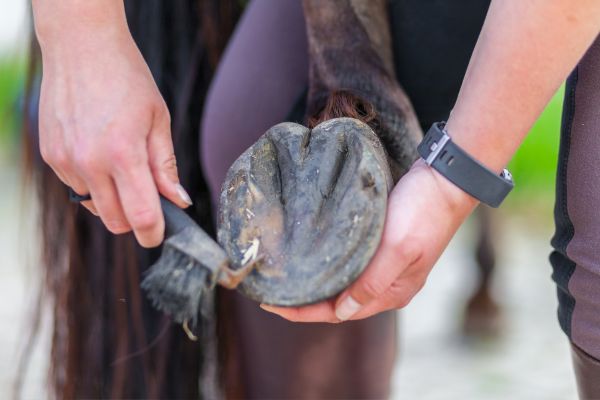
One of the simplest horse hoof care essentials is also one of the most important: cleaning the hooves every day.
Mud, manure, stones, and moisture can collect underneath the hoof and create conditions where infections thrive. Picking out the hooves helps remove debris while giving owners an opportunity to inspect for cracks, bruises, foul smells, or lodged objects.
Many experienced horse owners clean hooves before and after riding or work sessions. Even horses kept mostly in pasture benefit from routine checks. Wet ground after rain can soften the hoof excessively, while dry seasons may lead to brittle cracks.
The process itself usually takes only a few minutes. Over time, horses become comfortable with handling, which makes future trimming and veterinary care much easier.
The Role of Regular Trimming
Hooves grow continuously, much like human fingernails. Without trimming, they can become uneven, overgrown, or misshapen. This affects posture and movement, placing unnecessary strain on joints and tendons.
Most horses require trimming every six to eight weeks, although this varies depending on age, breed, activity level, and environment. A horse walking on rocky ground may naturally wear down hooves faster than one living in soft pasture.
Regular trimming helps maintain proper balance and prevents issues like splitting, flaring, or abnormal weight distribution. Farriers are trained to identify subtle changes in hoof structure that owners may overlook.
Some farmers try to stretch trimming intervals to save money or time, but delayed hoof maintenance often creates larger problems later. Consistency usually matters more than perfection.
Recognizing Common Hoof Problems
Even with good care, hoof problems sometimes appear. Early recognition is one of the most valuable skills a horse owner can develop.
Thrush is among the most common conditions, especially in damp environments. It affects the frog and produces a dark discharge with a strong odor. Horses may become tender or uncomfortable if the infection progresses.
Cracks in the hoof wall can develop from dryness, injury, poor nutrition, or uneven pressure. Some cracks remain minor, while deeper ones may interfere with movement.
Abscesses are another painful issue. They often appear suddenly, causing severe lameness. In many cases, trapped infection inside the hoof creates intense pressure. Horses may seem perfectly fine one day and barely willing to walk the next.
Laminitis, though more serious, is also important to understand. This inflammatory condition affects internal hoof tissues and can become life-threatening if ignored. Sudden heat in the hooves, reluctance to move, and unusual stance patterns may signal trouble.
Watching how a horse walks each day can reveal subtle changes before problems become severe.
How Nutrition Influences Hoof Health
Healthy hooves are built from the inside out. Nutrition plays a major role in hoof strength, growth, and resilience.
Horses require balanced diets containing adequate protein, minerals, vitamins, and clean water. Deficiencies sometimes show up first in the hooves through brittleness, slow growth, or poor texture.
Biotin is often discussed in relation to hoof care because it supports hoof quality in some horses. Minerals like zinc and copper also contribute to healthy tissue development. However, supplements alone cannot compensate for an overall poor diet.
Sudden feed changes or excessive sugary feeds may contribute to metabolic problems linked to hoof disorders such as laminitis. Maintaining stable feeding routines helps support overall hoof health.
Many farmers notice that seasonal pasture conditions affect hoof quality too. Hooves often respond differently during wet spring months compared to dry summer periods.
Stable and Pasture Conditions Matter
The environment where a horse lives has a direct effect on hoof condition. Constant exposure to mud softens the hoof and increases the risk of bacterial infections. On the other hand, extremely dry conditions can make hooves hard and brittle.
Clean bedding and well-drained turnout areas help reduce unnecessary moisture exposure. Horses standing for long periods in dirty, wet stalls are far more likely to develop hoof problems.
Movement is equally important. Horses are naturally designed to walk frequently throughout the day. Regular movement encourages healthy blood circulation within the hoof and helps maintain natural wear patterns.
Even horses that are not actively ridden benefit from turnout and freedom to move around comfortably.
Seasonal Changes and Hoof Care Adjustments
Hoof care routines often change with the seasons. Winter conditions may create frozen, uneven ground that stresses the feet, while spring mud increases infection risk.
During dry summer months, some horses develop cracking due to lack of moisture. Others may experience excessive hoof wear if working on hard surfaces.
Farmers who pay attention to seasonal patterns usually catch problems earlier. A horse that does well in one season may need additional care in another.
Rainy periods sometimes require more frequent cleaning, while icy conditions may demand careful footing management to prevent slipping injuries.
Good hoof care is rarely about following a single rigid routine. It is more about observing changes and adapting gradually.
Building Trust Through Hoof Handling
Handling a horse’s feet regularly builds trust between the animal and the owner. Young horses especially benefit from gentle, consistent hoof handling early in life.
Some horses resist having their feet lifted because of fear, discomfort, or lack of familiarity. Patience matters far more than force. Calm repetition usually creates better long-term behavior than aggressive correction.
Farmers who spend time quietly handling hooves often find that veterinary visits and farrier appointments become much smoother later on.
A relaxed horse also allows for better inspection, making it easier to spot injuries or abnormalities before they worsen.
Working With a Skilled Farrier
A knowledgeable farrier becomes one of the most valuable people in a horse owner’s routine. Good farriers do more than trim hooves or fit shoes. They observe movement, balance, hoof growth patterns, and subtle changes in structure.
Not every horse requires shoes. Many horses remain healthy barefoot, particularly if their workload and environment support natural hoof wear. Others benefit from shoeing for protection, traction, or corrective purposes.
The decision depends on the horse’s activity level, terrain, and overall hoof condition. Open communication between the owner, farrier, and veterinarian helps ensure proper care decisions.
Trusting experienced professionals while still learning basic hoof knowledge creates the best balance for most farmers.
Conclusion
Caring for a horse’s hooves is not glamorous work, but it is some of the most important work a farmer can do. Healthy feet support every movement the horse makes, from slow pasture walks to demanding days in the field.
The real horse hoof care essentials come down to consistency: daily cleaning, regular trimming, balanced nutrition, clean living conditions, and careful observation. Small habits practiced over time often prevent the biggest problems.
Horses rarely hide hoof discomfort for long. They communicate through movement, posture, and behavior. Owners who pay attention begin to recognize those signals early.
In the end, hoof care is less about perfection and more about steady, thoughtful care. A horse with strong, healthy hooves usually moves with comfort, confidence, and ease—and that affects every part of its life.