

Why Animal Games Make Learning Feel Natural
Animal games for kids have a special kind of magic. They do not feel like lessons, yet children often learn more through them than they do from sitting still and being told facts. A child pretending to crawl like a turtle, roar like a lion, or hop like a frog is not just being silly. They are observing movement, building coordination, using imagination, and beginning to understand how living creatures behave.
Animals are already fascinating to most children. They appear in bedtime stories, cartoons, songs, parks, farms, zoos, and picture books. When that natural curiosity becomes part of play, learning feels easy. A simple guessing game about animal sounds can turn into a conversation about habitats. A pretend safari in the living room can introduce ideas about forests, grasslands, and water animals. The learning sneaks in gently, which is often the best way for young minds to absorb it.
Imaginative Play With Animal Characters
Pretend play is one of the simplest ways to bring animals into a child’s day. Children can become zookeepers, jungle explorers, pet doctors, farmers, or forest rangers. They might care for stuffed animals, build little homes out of cushions, or create a rescue center for toy animals that need help.
This kind of play encourages empathy. When a child says, “The baby elephant is hungry,” or “The puppy is scared,” they are practicing emotional understanding. They are learning that other living things have needs, feelings, and safe spaces. That may sound like a big idea for a small game, but children often reach those ideas naturally when they are allowed to play freely.
Parents and teachers do not need to overdirect the game. A few open questions can keep it moving. Where does this animal sleep? What does it eat? Is it friendly, shy, fast, slow, loud, or quiet? These little prompts help children think more deeply without turning the moment into a formal lesson.
Animal Movement Games for Active Kids
Some of the best animal games for kids are wonderfully physical. Children love to move, and animals offer endless inspiration. They can stretch like cats, waddle like penguins, jump like kangaroos, stomp like elephants, or slither like snakes. These games work beautifully indoors on a rainy day or outdoors when there is space to run around.
Movement games help children develop balance, flexibility, body awareness, and strength. A crab walk across the room may look funny, but it uses muscles in the arms, legs, and core. Hopping like a rabbit builds coordination. Flying like a bird encourages big arm movements and rhythm.
A fun version is “animal parade,” where one child chooses an animal and everyone else copies the movement. Another child then picks the next animal. The game can be slow and gentle for younger children or faster and more challenging for older ones. It also gives children a chance to lead, which can be surprisingly confidence-building.
Guessing Games That Build Observation Skills
Animal guessing games are easy to set up and useful for language development. One child can act out an animal while others guess. Another version uses clues instead of actions. “I live in the ocean. I have fins. I can be very big.” Children listen, compare details, and make connections.
These games teach children to notice differences. Some animals have fur, while others have feathers or scales. Some live in trees, others in water, deserts, farms, or cold places. Without realizing it, children begin sorting animals into categories. This is early science thinking, wrapped inside play.
For younger children, keep the clues simple. For older children, make them more specific. Instead of saying, “It has stripes,” you might say, “It is a big cat with orange fur and black stripes.” The game grows with the child, which is one reason it stays useful for many ages.
Animal Sound Games for Listening and Language
Animal sounds are often among the first playful sounds children learn. Moo, quack, roar, neigh, and chirp are fun to say, and they help children practice speech patterns. Sound games can be especially helpful for preschoolers because they connect listening, memory, and expression.
One easy game is matching sounds to animals. An adult makes a sound, and the child names the animal. Then the child makes a sound for the adult to guess. Children usually enjoy the role reversal, and it often leads to laughter.
Animal sound games can also become storytelling games. A child might create a farm morning where the rooster wakes everyone up, the cow calls from the barn, and the horse trots across the field. The sounds become part of a little world. That is where language grows, not just through correct answers, but through playful use.
Animal Matching and Sorting Games
Matching games are quiet, focused, and excellent for developing memory. Children can match animal pictures to names, babies to adult animals, animals to habitats, or animals to their foods. These activities can be done with cards, drawings, toy animals, or even pictures cut from old magazines.
Sorting is another helpful activity. Children might group animals by where they live, how they move, what they eat, or whether they are wild or domestic. The point is not to make everything perfect. Sometimes a child will place an animal in an unexpected group, and that can open a lovely conversation. Why did you put the duck with water animals? Why did you place the horse with farm animals?
These small decisions help children explain their thinking. They learn that categories can be useful, but they also learn that the natural world is full of variety.
Outdoor Animal Games and Nature Walks
Outdoor play gives animal learning a real-world feeling. Children can look for birds, insects, paw prints, nests, or signs of animal activity. Even a short walk can become a gentle observation game. What animals might live in this tree? What sounds can we hear? Did something move in the grass?
A nature scavenger hunt can be simple and calm. Children might search for something that flies, something that crawls, something with wings, or something that lives near flowers. The goal is not to disturb animals, but to notice them respectfully.
Outdoor animal games also teach patience. Real animals do not perform on command. Sometimes children have to wait, listen, and look closely. That quiet attention is valuable. It helps them feel connected to the world around them.
Story-Based Animal Games
Stories and animal games fit together beautifully. After reading a story about woodland animals, farm animals, or sea creatures, children can act out the scenes. They can change the ending, add a new animal, or create their own adventure.
Story-based games are especially good for imagination and emotional learning. A shy animal might need a friend. A lost animal might need help finding home. A group of animals might solve a problem together. Through these stories, children practice kindness, teamwork, courage, and problem-solving.
There is no need for perfect storytelling. In fact, the messy versions are often the best. A child may mix a giraffe, a duck, and a whale into the same forest adventure. That playful freedom is part of the charm.
Digital Animal Games With Balance
Digital games can also have a place when used thoughtfully. Some animal-themed games help children learn names, sounds, habitats, and simple facts. Interactive puzzles, memory games, and drawing apps can be useful, especially when an adult talks with the child during or after the activity.
The key is balance. Screen-based animal games should not replace movement, pretend play, reading, or outdoor exploration. They work best as one small part of a wider mix. A child who plays a digital game about ocean animals may later draw a fish, read a sea life book, or pretend the sofa is a boat. That connection between screen and real-world play makes the experience richer.
Choosing Games for Different Ages
Younger children usually enjoy simple imitation, sounds, and matching games. They like quick activities, familiar animals, and plenty of repetition. Repeating the same animal sound ten times may feel ordinary to an adult, but for a toddler, it can be deeply satisfying.
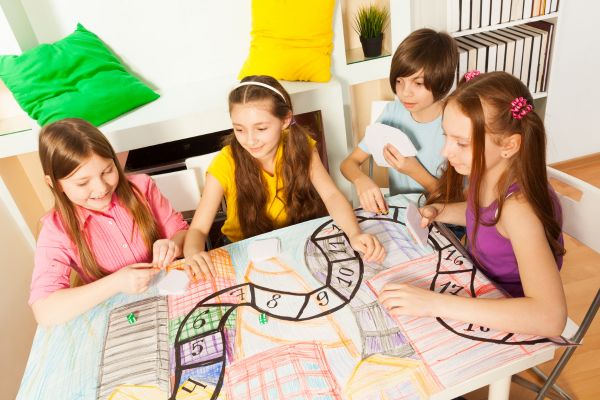
Preschool and early school-age children can handle more complex games. They may enjoy clues, sorting, storytelling, obstacle courses, and pretend roles. Older children can add facts, rules, teams, or creative challenges. They might design their own animal board game, invent a wildlife rescue mission, or research an animal before acting it out.
The best animal games grow from the child’s interest. If a child is fascinated by dinosaurs, ocean animals, pets, or jungle creatures, start there. Curiosity is the doorway.
Conclusion
Animal games for kids do more than fill time. They help children move, imagine, listen, speak, observe, and care. Through playful moments, children begin to understand that animals are not just cute characters in books or cartoons. They are living creatures with homes, habits, sounds, movements, and needs.
The beauty of these games is their simplicity. A few toy animals, a little space to move, a storybook, or a walk outside can become a full afternoon of learning. When children play through the world of animals, they are not only learning facts. They are building wonder, and that wonder can stay with them for a long time.