

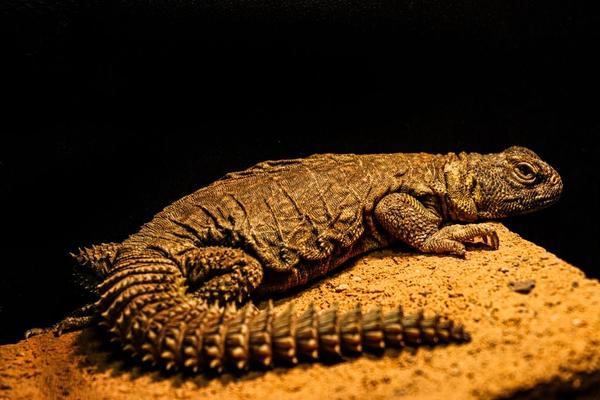
Uromastyx look built for harsh places: sturdy bodies, watchful eyes, and spiny tails that help them defend rocky retreats. Their care is different from that of many familiar pet lizards. They need intense daytime heat, bright light, dry air, and a mostly plant-based menu. The trick is not simply making an enclosure hot. It is giving the animal a choice between a sun-baked basking spot and cooler, sheltered spaces.
Good uromastyx care starts with that contrast. Species differ in size and environmental needs, so identify your lizard before finalising its setup, ideally with guidance from a reptile-experienced veterinarian.
Build an Enclosure Around Movement and Shelter
For many adult, medium-sized species, a uromastyx enclosure measuring at least 4 feet long, 2 feet wide, and 2 feet high (120 × 60 × 60 cm) is a sensible starting point. Larger species, particularly Egyptian uromastyx, require substantially more room. Floor area matters because these terrestrial lizards roam, dig, and move between different temperatures.
Provide secure rock-like hides at both ends, low climbing structures, and clear walking routes. Flat stones and stable shelves create basking choices. Anchor heavy furnishings directly on the enclosure floor before adding substrate; a digging lizard should never be able to undermine a rock pile.
Choosing a Safe Substrate
A well-packed desert mix of appropriate sand, organic topsoil, and clay can support natural digging. Aim for several inches of depth where the enclosure design permits. Loose substrate needs careful husbandry: serve food in a dish, remove contaminated patches, and avoid calcium sand or sharp, dusty materials. Newly acquired, ill, or recovering lizards may need paper towels temporarily so their waste and condition are easier to monitor.
Get the Basking Temperature Right
Heat is a defining feature of uromastyx husbandry. Many commonly kept species use basking surfaces around 120–130°F (49–55°C), although the appropriate target depends on species and individual behaviour. This describes the surface under the lamp, not the temperature of every corner of the enclosure.
Maintain a cooler zone around 80–90°F (27–32°C), adjusting for the species. A modest overnight drop is normal; many setups run around 70–80°F (21–27°C) at night, provided the animal’s particular needs are met. Avoid keeping the whole habitat uniformly hot.
Measure Surfaces, Not Just Air
Use an infrared thermometer to check the basking rock and digital probe thermometers to monitor air temperatures. Overhead halogen flood lighting usually provides more appropriate daytime basking heat than heated rocks, which can cause burns. Secure lamps, use suitable controls, and ensure the lizard cannot touch hot fittings.
For example, a basking stone might measure 125°F while the shaded hide at the opposite end reads 85°F. Both readings matter. If your uromastyx spends all day hiding or never leaves the heat source, investigate the gradient, lighting, security, and health rather than assuming one temperature explains everything.
Uromastyx UVB and Daylight Lighting
Uromastyx are active in daylight and depend on ultraviolet B exposure to produce vitamin D3 and use dietary calcium effectively. A high-output linear T5 UVB fixture is generally preferable to relying on a small compact bulb. Position it over the basking region while leaving shaded areas available.
Bulb strength alone does not tell you what reaches the animal. Distance, screen mesh, reflector design, and bulb age change UVB exposure. For many commonly kept species, a measured UV index around 4.5–6 at the basking position is a useful husbandry target. Follow the manufacturer’s placement guidance and, ideally, verify exposure with a suitable UV meter.
Offer a consistent daytime light cycle of roughly 10–12 hours, with adjustments appropriate to the species and season. Add bright visible daylight lighting if the enclosure remains dim. Ordinary white LEDs do not replace reptile UVB lamps. A separate explanation of reptile UVB lighting can help owners understand placement and replacement intervals.
Keep the Air Dry Without Eliminating All Moisture
Most commonly kept uromastyx thrive in low ambient humidity, often around 20–30%, although some species naturally require different conditions. Use a digital hygrometer and good ventilation rather than guessing from the appearance of desert décor.
Dry air does not mean a completely moisture-free habitat. In nature, burrows can be cooler and slightly more humid than the surface. A sheltered retreat can provide that contrast without making the whole enclosure damp. Avoid routine enclosure-wide spraying unless species-specific advice calls for it, and keep the exposed substrate surface dry.
Plan a Varied, Plant-Focused Uromastyx Diet
A uromastyx diet should centre on fibrous greens and safe edible flowers, not mealworms or fruit. Rotate foods such as collard greens, mustard greens, turnip greens, dandelion leaves, endive, escarole, and pesticide-free hibiscus flowers. A safe leafy greens guide helps when selecting less familiar edible plants.
Offer young animals fresh food daily; many healthy adults eat several days a week, with frequency and portions adjusted for body condition and veterinary advice. Small quantities of suitable seeds or legumes may complement the greens, but they should not displace the leafy staples. Avoid making sugary fruit or animal protein regular parts of the menu.
Calcium and Feeding Practicalities
Use a reptile-appropriate calcium supplement on a schedule matched to age, diet, and UVB exposure. Too much supplementation can also create problems, so confirm frequency with an experienced reptile vet. Do not assume powdered calcium compensates for weak UVB.
Hydration, Cleaning, and Health Checks
These desert lizards obtain considerable moisture from fresh vegetation, but they can still become dehydrated. Some rarely drink from bowls; others will use a shallow, clean dish. Provide water when appropriate for your animal and follow veterinary guidance rather than withholding it automatically. Never force-feed water or routinely soak a healthy lizard without a specific reason.
Remove leftover greens and droppings promptly. Wash feeding dishes, replace soiled substrate, and clean surfaces with a reptile-safe product, allowing everything to dry before the lizard returns. Check temperatures and lighting equipment regularly, not only when the animal seems unwell.
Track appetite, weight, activity, stool, and shedding. Persistent lethargy, swollen joints, weakness, repeated refusal to eat, or sunken eyes deserve attention from a reptile veterinarian. A newly acquired uromastyx also benefits from a baseline examination and appropriate parasite screening.
Frequently Asked Questions
Are uromastyx good beginner lizards?
They can be rewarding pets, but their demanding heat, UVB, and enclosure requirements make them better suited to keepers willing to monitor equipment carefully. Research the exact species before buying.
What is the ideal uromastyx basking temperature?
For many popular species, a basking surface around 120–130°F (49–55°C) works well. Confirm the species-specific range and provide a cooler retreat.
Can uromastyx eat insects?
Their routine captive diet should be overwhelmingly plant-based. Some species occasionally eat animal matter in the wild, but regular insect feeding is generally unnecessary and may create nutritional problems.
Do uromastyx need a water bowl?
Many obtain much of their water through greens, yet access to clean water can still be appropriate. Hydration strategies should account for species, age, health, and enclosure humidity.
Make the Habitat Work as a System
Successful uromastyx care is about connected choices: strong heat beside safe shade, powerful UVB beside secure retreats, and a dry landscape paired with fresh, moisture-rich greens. Measure the environment, watch how your lizard uses it, and refine the setup as its needs become clearer.