

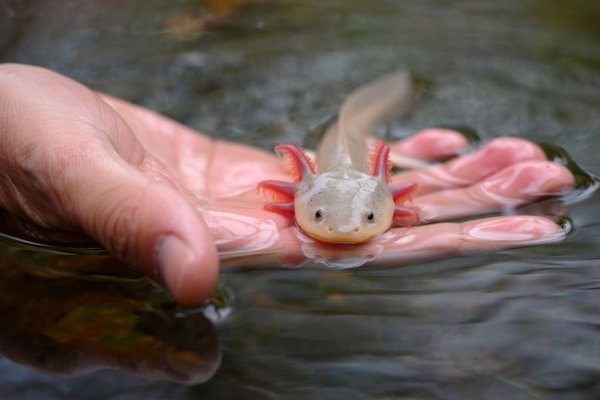
An axolotl may look perfectly content while its water is becoming unsafe. These fully aquatic salamanders have delicate external gills and depend on cool, stable freshwater. Successful axolotl care starts with the conditions you cannot see: a mature biological filter, safe water chemistry, and dependable temperature control.
Build the habitat in that order. Once the essentials are reliable, shelters and plants can make the aquarium more interesting without getting in the way of its most important job: keeping the animal healthy.
Choose a Long, Spacious Tank
For one adult, a 20-gallon-long aquarium (about 75 litres) is a commonly recommended starting minimum. A 30-gallon or larger tank provides more usable space and greater water stability. Length matters more than height because axolotls spend much of their time walking and resting along the bottom.
Place the tank on a sturdy, level stand away from direct sunlight, heaters, and warm electronics. Fit a secure lid, leave enough room for routine maintenance, and choose equipment that will work throughout the warmest months.
Substrate, Hides, and Lighting
A bare bottom is straightforward to clean and particularly suitable for juveniles. Very fine, well-rinsed aquarium sand can be appropriate for sufficiently grown adults. Avoid gravel and small pebbles: axolotls gulp food and may swallow stones, risking intestinal obstruction.
Include at least two smooth shelters with openings large enough to prevent scrapes. Keep lighting subdued, with shaded areas for resting. Hardy aquatic plants are optional; they should not crowd the floor or require intense lighting.
The safest axolotl tank setup usually houses one axolotl without fish. Fish can nip its gills, and axolotls may swallow smaller tankmates. Two axolotls also risk biting each other, especially during feeding.
Cycle the Aquarium Before Bringing an Axolotl Home
Clear water is not automatically safe. Waste releases ammonia; beneficial bacteria convert it to nitrite and then nitrate. Ammonia and nitrite are toxic, so the biological filter must become established before the animal enters the aquarium.
Use a fishless cycling method and a liquid test kit. Confirm that the filter can consistently process its expected waste load without detectable ammonia or nitrite. Cycling can take several weeks, particularly in cool water. Never use an axolotl to test whether the cycle is ready.
For routine monitoring, aim for ammonia at 0 ppm, nitrite at 0 ppm, and nitrate preferably below about 20 ppm. Keep pH stable, generally in a neutral to slightly alkaline range, rather than chasing one exact reading with additives. Learning the aquarium nitrogen cycle helps explain why these numbers matter.
Choose Gentle, Effective Filtration
Axolotl filtration needs to support beneficial bacteria without creating a strong current. An air-driven sponge filter is a popular choice; a canister filter can work with a diffused or baffled outlet. Position intakes safely and watch whether the flow pushes the animal around.
Clean filter media gently in water removed from the aquarium when needed. Replacing all the media or rinsing it under untreated tap water can damage the bacterial colony and destabilise the tank.
Manage Axolotl Water Temperature
Aim for approximately 16–18°C (60–64°F). Sustained temperatures above 20°C (68°F) should be avoided, while readings around 22°C (72°F) or higher can become dangerous. Axolotls normally need cooling rather than an aquarium heater.
Use a reliable thermometer and check it daily. A naturally cool room may be enough, but warmer homes often require an aquarium chiller. Surface fans can help through evaporation, although their effectiveness varies with humidity and room temperature.
Here is a useful preparation test: run the empty, filtered tank through a hot afternoon. If the water reaches 24°C, cooler nighttime readings do not solve the problem. Arrange dependable cooling before buying the axolotl, then confirm that temperatures remain stable during the day.
Test Water and Plan Partial Changes
Test temperature, ammonia, nitrite, nitrate, and pH regularly. Record readings, especially while the aquarium is new or after filter maintenance. The log can reveal rising nitrate or a disrupted nitrogen cycle before obvious symptoms appear.
A partial water change of around 20–25% weekly is a reasonable starting schedule, adjusted to actual test results. Treat replacement tap water to remove both chlorine and chloramine, and match its temperature closely to the aquarium before adding it.
If ammonia or nitrite appears, investigate promptly. Check for uneaten food, trapped waste, reduced filter performance, or a disturbed cycle. Appropriately conditioned water changes may be required. Understanding aquarium water-quality tests is more useful than assuming that clear water is clean.
Feed a Suitable Carnivorous Diet
Earthworms and nightcrawlers from safe sources are nutritious staples for many adult axolotls. Suitable sinking axolotl or carnivorous-salamander pellets can provide additional variety. Cut large worms into manageable pieces when necessary.
Axolotl feeding frequency changes with age. Juveniles often need daily meals; healthy adults commonly eat every two or three days. Adjust portions to body condition and appetite instead of treating any schedule as universal.
Offer food using suitable feeding tongs or a dish, and promptly remove leftovers. Decaying food worsens water quality. Bloodworms are better as an occasional supplement than as an adult’s entire diet. Avoid feeder fish because of disease, parasites, and injury risks.
Make Maintenance Routine, Not a Rescue Operation
Each day, check temperature, behaviour, equipment, and visible waste. Remove droppings and food remains with a small siphon or turkey baster. On maintenance day, test the water, perform an appropriate partial change, and inspect filter flow.
Avoid complete tank clean-outs, soap, or replacing all biological filter media at once. Handle the axolotl only when necessary because its skin and gills are delicate.
Persistent appetite loss, cottony patches, red or damaged skin, unusual floating, or severe lethargy warrant attention. Check water conditions immediately and seek advice from a veterinarian experienced with aquatic amphibians. Do not try unprescribed fish medications or salt treatments.
Frequently Asked Questions
Can an adult axolotl live in a 10-gallon tank?
A 10-gallon tank is generally too small for permanent adult housing. A long aquarium of at least about 20 gallons offers better floor space and water stability.
Do axolotls need heaters?
Usually not. They thrive in cool freshwater, commonly around 16–18°C. In warm homes, a cooling system is often more relevant.
Is aquarium gravel safe for axolotls?
No. Gravel can be swallowed during feeding and cause dangerous blockages. Choose a bare bottom or appropriately fine sand for a sufficiently grown adult.
How often should I clean the tank?
Remove waste whenever you find it, test water routinely, and schedule partial water changes according to tank conditions. Avoid stripping the whole aquarium.
Consistency Makes the Difference
A roomy tank, cycled gentle filtration, cool water, appropriate food, and steady maintenance form the foundation of good axolotl care. Establish those systems before the animal arrives, then keep checking the small details. Stability matters far more than elaborate décor.