

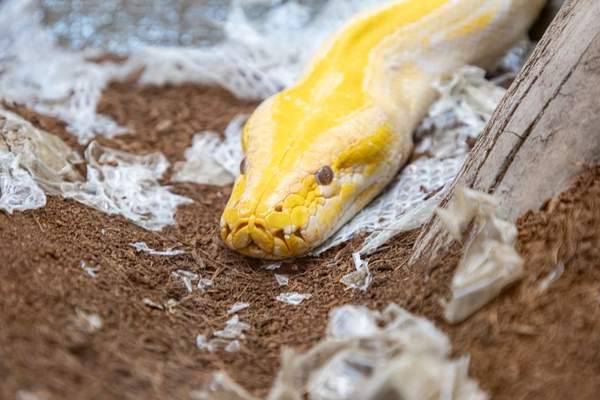
A snake emerges from its hide with ragged skin still attached. A leopard gecko finishes shedding but has a pale ring around one toe. Both situations can worry an owner, yet they require different attention. Reptile shedding problems often begin with enclosure conditions, although persistent trouble can also point to illness.
The safest response is to understand what is normal for the species, check vulnerable body parts, and address the cause instead of pulling at the shed.
Normal Shedding Versus an Incomplete Shed
Shedding, or ecdysis, replaces the outer skin. Many snakes shed in one continuous piece, though a broken shed is not automatically evidence of disease. Lizards commonly shed in patches, while turtles and tortoises shed differently again. A bearded dragon losing skin in sections is not necessarily experiencing an incomplete shed.
Before shedding, snakes may look dull, develop cloudy blue-grey eyes, and become less interested in food or handling. Their eyes usually clear before the old skin comes away. These changes are normal and do not mean the eyes need cleaning.
Dysecdysis is the veterinary term for abnormal shedding. Warning signs include old skin remaining after the cycle, repeated difficult sheds, tight bands around toes or tail tips, and possible retained eye caps in snakes.
What Causes Reptile Shedding Problems?
Humidity That Does Not Suit the Species
Humidity is a common culprit, but there is no universal target for all reptiles. Tropical and arid species need different conditions. Even a desert-dwelling gecko may benefit from a localized humid hide during shedding without needing the entire enclosure kept damp.
Measure humidity with a reliable hygrometer and compare readings with guidance for the exact species. Check for changes between morning and evening and differences between the warm and cool parts of the enclosure.
Dehydration and Inadequate Water Access
Dehydration can make shedding more difficult, particularly alongside unsuitable humidity. Provide clean water in a form the reptile can use, and maintain appropriate hydration opportunities. Spraying an enclosure is not a replacement for access to water.
Temperature, Furnishings, and Health
An enclosure that is too cool can disrupt normal reptile function. Verify species-appropriate basking and cooler temperatures, and use heating equipment safely. Secure branches, rocks, or other textured furnishings help reptiles rub off loosened skin.
Poor nutrition, parasites, skin infections, and other disorders can also cause dysecdysis. If husbandry seems appropriate but every shed is difficult, arrange a reptile-veterinary examination.
Safe Reptile Shedding Help at Home
Begin with observation. If your reptile is active and remaining skin looks loose, review its habitat and allow time for a natural shed. Avoid unnecessary handling, particularly when a snake’s pre-shed vision is impaired.
Provide an Appropriate Humid Hide
For species that use them, humid retreats can contain clean, slightly damp paper towel or suitable moss. Keep the hide accessible and at an appropriate temperature. Replace soiled material and prevent it from becoming waterlogged. Localized humidity may work better than soaking an entire arid enclosure with moisture.
A species-specific reptile humidity guide can help you judge suitable conditions. Avoid closing ventilation simply to raise humidity; excessive dampness creates its own risks.
Never Force Off Attached Skin
Do not peel resistant skin, scrape the face, or attempt to remove a snake’s eye caps. Pulling can tear living tissue or damage the eye. Avoid tape, oils, and improvised tools. Baths and soaking are not appropriate for every reptile; unsafe water depth or temperature can cause harm. Ask a reptile-experienced veterinarian before attempting hands-on treatment.
Pay particular attention to toes, tail tips, and eyes. Tight rings of retained skin can restrict circulation, so prompt professional advice matters more than a home remedy.
A Useful Post-Shed Inspection
Imagine your leopard gecko has left most of its shed behind overnight. Observe it under good light and check the toes without forcibly restraining it. Look for pale rings, swelling, redness, or darkened tips. If retained skin appears tight or a toe looks damaged, seek veterinary care promptly.
With a snake, inspect the discarded skin for the tail tip and clear eye-covering sections. Their absence does not prove that eye caps remain attached. Never touch or pull at the eyes; consult a veterinarian if retention is suspected.
Record the shedding date, warm-side and cool-side temperatures, humidity readings, water access, and areas where skin remains. Comparing this log with a reptile enclosure temperature guide can reveal patterns that a single enclosure check might miss.
When to Call a Reptile Veterinarian
Seek prompt veterinary advice if skin constricts a toe or tail, an eye looks swollen, or there is bleeding, discharge, a bad smell, or injured skin. Darkened toes or tail tips, severe weakness, and breathing difficulties warrant urgent assessment.
Arrange an examination for recurring incomplete sheds, suspected mites, persistent patches, or concerning changes in appetite and activity. A veterinarian can assess infections, parasites, nutritional deficiencies, and other causes that humidity adjustments cannot fix.
How to Prevent Another Difficult Shed
Prevention relies on consistent care: appropriate temperatures and humidity, clean water, balanced nutrition, safe textured surfaces, and a secure hide. Check equipment regularly and clean humid retreats. A reptile hydration guide may help you evaluate water provision for your particular species.
Keep notes from one shed to the next. If your reptile repeatedly struggles despite appropriate conditions, a veterinary assessment is more useful than repeatedly trying new shedding tricks.
Frequently Asked Questions
Is shedding in pieces normal for reptiles?
It is normal for many lizards. Snakes usually shed more continuously, while turtles and tortoises have different patterns. The concern is skin that remains attached in harmful places or repeated abnormal shedding.
Should I remove a stuck piece of skin myself?
No. Attached skin may still be connected to delicate tissue. Avoid pulling, especially near the eyes, toes, and tail. Get veterinary guidance if it persists or looks tight.
Does stuck shed always mean low humidity?
No. Humidity matters, but dehydration, incorrect temperatures, poor nutrition, parasites, infections, and other illnesses can contribute. Check husbandry without assuming it explains every case.
What if my snake has a retained eye cap?
Contact a reptile-experienced veterinarian. Do not try to lift the cap yourself. Swelling, discharge, or suspected injury requires particularly prompt care.
Support the Next Shed, Not Just the Current One
A successful shed is less about removing visible flakes than providing the right conditions for skin to release naturally. Monitor vulnerable areas, correct environmental problems thoughtfully, and seek help when retained skin threatens circulation or eye health. Careful prevention makes the next shed safer.