

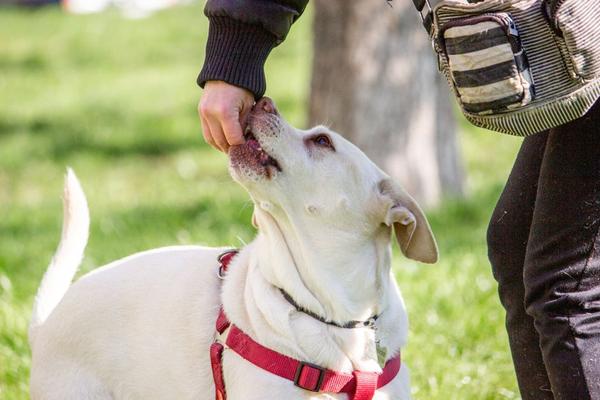
Positive reinforcement dog training works by making the behaviours you want more likely to happen again. When your dog sits, comes when called, walks beside you or settles on a mat, you immediately provide something the dog values. That reward might be food, play, access to sniffing, a toy or attention. Over repeated successful repetitions, the dog learns which choices pay off.
This approach is widely recommended by veterinary behaviour organisations because reward-based training can teach everyday skills without relying on fear, pain or intimidation. You arrange situations where the right behaviour is achievable, mark it clearly and reinforce it.
What Positive Reinforcement Actually Means
In learning theory, positive reinforcement has a precise definition: something is added after a behaviour, and that consequence makes the behaviour more likely in the future. The word “positive” means adding something.
If your puppy sits and receives a small piece of chicken, sitting is likely to increase if chicken is genuinely rewarding to that puppy. If the dog does not care about the reward, the behaviour may not strengthen. Effective reward-based training therefore starts with the individual dog.
Timing Matters More Than Saying “Good Dog”
Dogs learn from consequences that closely follow their behaviour. Reward too late and you may accidentally reinforce something else. A marker helps solve that problem. A clicker, or a short word such as “yes,” can identify the exact instant your dog performed the desired behaviour. The marker is then followed by a reward.
How Clicker Training Fits In
Clicker training is not a separate philosophy. It is a precise way to mark behaviour within positive reinforcement training. First, pair the click with a reward several times so the sound predicts something valuable. Then click the moment the desired behaviour happens and deliver the reward immediately afterwards.
You do not have to use a clicker forever. Once a skill is fluent, a verbal marker, real-life reward or occasional food reinforcement may be more convenient.
Three Ways to Teach a New Behaviour
Luring
Luring uses a reward to guide the dog into position. To teach a sit, move a treat slowly upward and slightly back over the dog’s nose. As the head follows, the rear often lowers. Mark the sit and reward it. Fade the food lure quickly so the dog learns the hand signal rather than following visible food forever.
Capturing
Capturing means waiting for a behaviour the dog offers naturally and reinforcing it. If your dog quietly lies on a mat while you work, mark and reward that moment. Capturing is especially useful for calmness because you reinforce the behaviour before the dog starts demanding attention.
Shaping
Shaping rewards small steps toward a final behaviour. To teach a dog to enter a crate willingly, you might reward looking at the crate, approaching it, putting one paw inside, entering fully and eventually resting there.
A Practical Example: Teaching Polite Greetings
Imagine a dog that jumps on visitors. Punishing the jump may interrupt it, but it does not automatically teach the dog what to do instead. A force-free training plan gives the dog a clear alternative.
Before opening the door, use a lead or gate so jumping cannot be repeatedly practised. Reward four paws on the floor or a sit. The visitor approaches only while the dog remains grounded. If the dog jumps, the visitor quietly pauses or steps away. When four paws return to the floor, the greeting resumes.
Access to the visitor can itself be the reward. The dog learns that calm behaviour makes greetings happen, while jumping temporarily makes the greeting stop.
Why Management Belongs in Training
Good training is not just what happens during a short session. Management prevents unwanted behaviour from being rehearsed while the dog learns a better option. Gates, long lines and extra distance from triggers can make successful choices easier.
Recall training, for example, should begin in a secure area or on a long line, not beside a busy road. Reward successful responses generously. Calling repeatedly when the dog is likely to ignore you can teach that the cue is optional.
How Rewards Change as Skills Improve
New behaviours usually benefit from frequent reinforcement. Once the dog understands the skill, rewards can become less predictable and everyday activities can reinforce behaviour. A calm wait may earn permission to go through a door, while loose-leash walking may earn access to a favourite sniffing spot.
Do not remove rewards too quickly. A behaviour that works in the kitchen may fall apart in a busy park. Increase difficulty gradually. If performance drops, make the task easier and rebuild success.
What Reward-Based Training Is Not
Positive reinforcement does not mean allowing every behaviour. Clear boundaries, prevention and consequences still matter. Reward-based trainers can withhold access to something the dog wants, redirect behaviour, end play briefly or change the environment, while focusing on teaching rather than frightening or hurting the dog.
The American Veterinary Society of Animal Behavior recommends reward-based methods for dog training and behaviour modification and advises against aversive tools and techniques such as shock collars, prong collars and physical corrections. Research links aversive approaches with welfare risks including fear, stress and anxiety, while reward-based methods can be effective without those added risks.
When Home Training Is Not Enough
Basic manners can often be taught at home, but aggression, severe fear, separation-related distress or sudden behaviour changes deserve professional help. Pain and medical problems can contribute to behaviour, so a veterinarian should be involved when a problem appears suddenly or is intense.
Look for a trainer or behaviour professional who can explain what happens when the dog gets something right and what happens when the dog gets something wrong. Avoid anyone who relies on intimidation, “alpha” techniques or guaranteed quick fixes.
Frequently Asked Questions
Do I have to use treats forever?
No. Food is convenient because it is quick to deliver, but mature behaviours can also be reinforced with play, praise, sniffing, access to outdoors or other things your dog values. Keep rewarding difficult behaviours often enough to maintain them.
What if my dog is not food motivated?
Try different foods, reduce distractions and test non-food rewards such as toys or access to sniffing. A dog refusing normally valued food may also be too stressed, frightened or distracted to learn effectively.
Can positive reinforcement stop unwanted behaviour?
Yes, especially when you combine reinforcement of an alternative behaviour with sensible management. The aim is not merely to suppress a mistake but to teach a response that works better for both dog and owner.
How long should training sessions be?
Short sessions are usually more productive than long drills. A few focused minutes several times a day can be enough. Stop while the dog is still engaged, and use daily routines as extra training opportunities.
Make the Right Choice Easy to Repeat
The most effective positive reinforcement dog training methods are simple: set the dog up to succeed, mark the behaviour you want, reward it promptly and practise at a level the dog can handle. As skills improve, add distractions gradually and use real-life rewards. Training becomes less about correcting mistakes and more about showing your dog exactly which choices lead to good outcomes.