

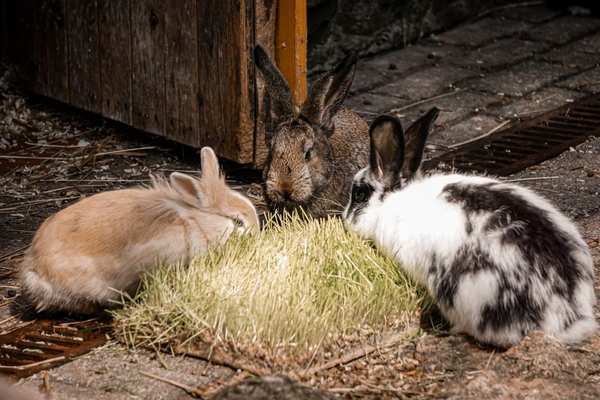
A healthy rabbit diet looks less like a bowl of colorful pet food and more like a constant supply of hay with carefully chosen extras. Rabbits are built to graze on fibrous plants throughout the day, and their food influences their teeth, digestion, and weight. This rabbit feeding guide explains what belongs in the daily routine, what should remain an occasional treat, and when to seek help.
Make Hay the Foundation of Every Day
Fresh grass hay should be available to an adult rabbit at all times. Animal welfare organizations describe hay and grass as roughly 80–85% of the diet. That percentage explains priorities; it is not a reason to ration hay. Refill it whenever supplies run low.
Chewing long strands of rabbit hay helps wear down continuously growing teeth. Fiber also supports normal movement through the digestive tract. A rabbit that fills up on pellets or sweet snacks may eat too little hay, increasing the risk of dental and digestive trouble.
Which Hay Is Best?
Timothy, orchard grass, meadow, and oat hay are good choices for most healthy adults. Offer clean, fragrant hay that is dry but not dusty, moldy, or musty. Different varieties have different textures, so a rabbit that ignores one may enjoy another.
Alfalfa is richer in protein and calcium than grass hay. It may suit growing youngsters or rabbits with special nutritional needs, but it is not standard unlimited hay for healthy adults. Ask a rabbit-savvy veterinarian about age-related feeding changes.
Place generous piles of hay near the litter area and favorite resting spots. Rabbits often nibble while using the litter tray.
Choose Leafy Greens for Variety, Not Bulk
Vegetables for rabbits should complement hay rather than replace it. Offer a rotating selection of washed leafy greens and herbs, introducing unfamiliar foods one at a time. Romaine lettuce, coriander, basil, rocket, watercress, endive, and carrot tops are familiar options for many adult rabbits.
Start with a small portion of a new green and watch eating habits and droppings before adding another. This makes it easier to identify a food that does not agree with your rabbit. Remove spoiled leftovers promptly and avoid plants exposed to pesticides.
Leafy greens are more useful as everyday fresh food than sugary root vegetables. Carrot tops can join the regular rotation, but the orange carrot itself is better treated as an occasional extra. Spinach and some other greens are best rotated rather than offered daily as the only vegetable.
A rabbit-safe vegetables checklist can help you plan variety across the week without introducing several unfamiliar foods at once.
Feed Pellets in Measured Portions
Plain, high-fiber rabbit pellets can help supply nutrients that may be harder to balance through hay and greens alone. For most healthy adult rabbits, choose a grass-hay-based product made for their life stage. Avoid muesli-style mixes containing colorful flakes, seeds, corn, nuts, or dried fruit.
Pellet portions vary with body weight, age, activity, health, and product formulation. Veterinary guidance differs on exact tablespoon or cup measurements, so use the manufacturer’s instructions as a starting point and ask your vet to tailor the amount. Pellets should never crowd hay out of the rabbit diet.
Measure the day’s allowance instead of topping up a bowl whenever it looks empty. Scatter some pellets through clean hay or a safe foraging mat to encourage searching behavior without adding calories.
Keep Treats Small and Occasional
A thin slice of apple with its seeds removed, a tiny piece of banana, or a small berry may delight a healthy rabbit. Fruit contains sugar, and frequent sweet treats can encourage selective eating and weight gain. Carrot pieces belong in this occasional category too.
Useful rewards can come from the daily allowance: a sprig of basil, a favored leafy green, or a few reserved pellets. Skip yogurt drops, biscuits, sugary commercial mixes, and other human-style snacks.
If several family members give treats, agree on a shared allowance so your rabbit is not being rewarded repeatedly without anyone realizing it.
Foods Rabbits Should Never Be Offered
Not every plant-based food is safe for rabbits. Keep chocolate, avocado, rhubarb, onions, garlic, leeks, and fruit pits or seeds away from them. Meat, eggs, dairy, bread, and processed sweets are unsuitable. Avoid iceberg lettuce, raw potatoes, lawnmower clippings, and unknown garden plants too.
Check houseplants and outdoor areas your rabbit can access. Willingness to chew something does not prove it is safe. If you suspect a toxic food has been eaten, contact a veterinarian promptly instead of waiting for symptoms.
Fresh Water Is Non-Negotiable
Provide clean drinking water around the clock. Many rabbits drink readily from a sturdy ceramic bowl, while others are accustomed to a bottle. If using a bottle, check its spout daily for blockages; a bowl offers an additional option. Wash containers, replace water regularly, and check for freezing in cold weather.
A Simple Daily Feeding Routine
Imagine an adult indoor rabbit named Clover. In the morning, Clover gets a fresh heap of timothy hay, clean water, familiar greens, and part of the measured daily pellet allowance. In the evening, the hay is refreshed, remaining greens and pellets are offered, and uneaten fresh food is removed.
During playtime, a few pellets from that same allowance are hidden in a cardboard forage toy. Once or twice during the week, Clover might receive a tiny piece of fruit. Most chewing happens between meals at the hay pile, not at a permanently full pellet bowl.
Track appetite, droppings, and body condition. Rabbits normally produce plenty of round droppings and also re-ingest softer nutrient-rich caecotrophs, often without owners noticing. A rabbit that stops eating, produces few or no droppings, or seems hunched and uncomfortable needs urgent veterinary assessment; gut stasis can become life-threatening.
Young, pregnant, nursing, elderly, underweight, or medically fragile rabbits may need a different balance. Follow individualized veterinary guidance rather than applying an adult maintenance routine unchanged. A rabbit weight and body-condition guide can also help you monitor long-term changes.
Frequently Asked Questions
Can Rabbits Eat Only Hay?
Unlimited grass hay is essential, but a balanced adult diet usually includes suitable leafy greens and a measured portion of quality pellets. Discuss any pellet-free plan with a rabbit-experienced veterinarian.
How Often Should I Feed My Rabbit Pellets?
Measure a suitable daily allowance and offer it once or split it into morning and evening portions. Hay and fresh water must remain available between feedings.
Can I Change My Rabbit’s Food Overnight?
No. Introduce new greens, hay varieties, and pellet brands gradually. Sudden changes can upset digestion. Ask your vet for a transition plan if your rabbit has an existing illness.
What If My Rabbit Eats Pellets but Refuses Hay?
Arrange a veterinary check to rule out dental pain or illness. Then review pellet portions, hay freshness, and access. A rabbit that accepts tasty pellets is not necessarily healthy.
Build the Diet Around What Rabbits Do Naturally
The most reliable rule is simple: keep good grass hay abundant, make greens varied, measure pellets, and treat sweets as rare extras. Pair that routine with clean water and attention to appetite and droppings. A thoughtfully stocked hay pile does more for rabbit nutrition than an overflowing bowl of treats.