

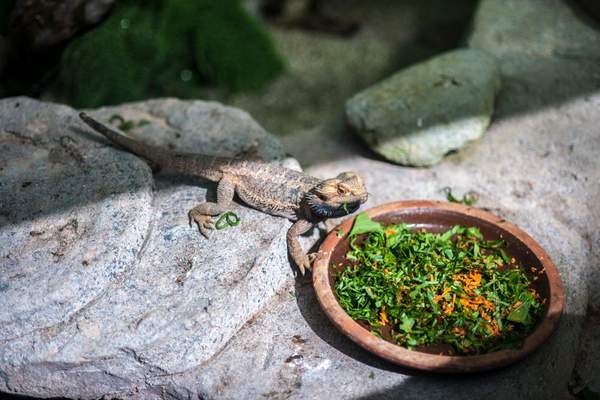
A baby bearded dragon may rush toward a cricket while barely acknowledging a bowl of greens. A healthy adult needs the opposite balance: plenty of leafy plants and a measured supply of insects. That change is the heart of a bearded dragon diet by age, and getting it right matters more than following one rigid feeding ratio.
Bearded dragons remain omnivores throughout life. They do not suddenly become vegetarian at a birthday. Instead, their energy needs, growth rate, body condition, and appetite change gradually. Treat age as a starting point, then adjust portions with guidance from a reptile-experienced veterinarian.
How the Feeding Balance Changes With Age
Hatchlings need frequent, small meals containing substantial insect protein. As growth slows, vegetables become increasingly important. By adulthood, nutritious greens should form most of the everyday menu, while feeder insects are offered in controlled amounts.
Recommendations differ. The RSPCA describes young dragons eating approximately 65% live food and 35% greens, with the balance shifting toward plants as they mature. Other veterinary guidance places adult plant intake higher. These percentages are directions, not exact measurements of calories or a reason to count every bite.
Hatchlings: Birth to Around Four Months
Very young dragons grow quickly and generally need small insects more frequently than adults. Offer tiny crickets, small dubia roaches where legal, or suitable black soldier fly larvae from reputable suppliers. Hatchlings may need two or more small feeding sessions daily, depending on size, health, and veterinary advice.
Introduce finely chopped bearded dragon greens from the beginning, even if the youngster ignores them. A shallow dish of fresh leaves builds familiarity. Never force a growing hatchling to eat vegetables by withholding necessary insect meals.
Prey size is particularly important. Choose insects smaller than the width of the dragon’s head, erring on the smaller side for babies. Oversized prey can cause serious feeding difficulties. Remove uneaten live insects after meals.
Juveniles: Roughly Four to Twelve Months
Juvenile bearded dragon feeding is a transition rather than a fixed formula. Many still eat insects daily, but salads should become more varied and substantial. A younger juvenile may remain insect-led; an older juvenile may approach a more even balance between insects and vegetables.
Offer leafy greens every day and rotate insect species instead of relying on one favorite. Check body condition and weigh the dragon regularly under consistent conditions. Steady growth and normal activity are more useful guides than an internet chart promising a universal insect count.
If a juvenile loves roaches but leaves its greens untouched, try offering salad first in the morning, once the enclosure is warm enough. Provide an appropriate insect meal later rather than abruptly cutting protein. A guide to safe bearded dragon greens can help vary that morning dish.
Subadults and Adults: Make Plants the Main Course
Between roughly twelve and eighteen months, many dragons begin needing fewer insect calories. Exact maturity depends on individual growth. Reduce insect portions gradually while keeping fresh salads available daily.
For a healthy adult, leafy vegetables commonly make up the majority of food, often described as roughly 60–80% or more depending on the guidance used. Insects remain part of the diet but should not dominate every meal. Some plans offer insects a few times weekly rather than daily; suitable frequency depends on weight, activity, and health.
Adults can gain excess weight when routinely fed large amounts of energy-dense insects. Discuss unexplained weight loss, rapid gain, or declining appetite with a reptile veterinarian rather than correcting everything through portion restriction.
Which Greens and Feeder Insects Belong on the Menu?
Build Salads Around Nutritious Leaves
Useful choices include collard greens, dandelion greens, turnip greens, watercress, chicory, and appropriately varied mustard greens. Add smaller amounts of grated squash or other suitable vegetables. Wash produce, chop it to manageable sizes, and replace leftovers before they spoil.
Avoid making spinach or beet greens everyday staples because their oxalates can interfere with mineral availability. Watery lettuce offers less nutrition than a varied mix of darker leaves. Fruit should be an occasional small treat, not a daily shortcut for tempting a reluctant eater.
Choose Insects for Nutrition, Not Just Excitement
Crickets, suitable roaches, silkworms, and black soldier fly larvae add variety. Feed the insects a nutritious gut-loading diet before offering them to your dragon. A feeder insect gut-loading guide can help plan that preparation.
Fatty waxworms and similar treats should remain occasional. Never offer wild-caught insects that may have contacted pesticides, and never feed fireflies, which are toxic to bearded dragons.
Portions, Supplements, and the Enclosure Work Together
No fixed number of insects suits every bearded dragon. Portions depend on prey size, growth, and current weight. Serve manageable amounts, remove leftover insects, and watch long-term body condition instead of rewarding every begging display.
Bearded dragon supplements help prevent nutritional deficiencies, especially calcium shortages. Gut-loaded insects are commonly dusted lightly with reptile-appropriate calcium; vitamin and vitamin D3 schedules depend on age, diet, product strength, and UVB exposure. More powder is not automatically better. Establish the schedule with a reptile veterinarian.
Correct UVB lighting and basking temperatures are essential for calcium metabolism and digestion. Supplements cannot compensate for inadequate husbandry. A bearded dragon UVB and heating checklist can help identify setup details worth reviewing.
A Practical Weekly Feeding Routine
Consider a healthy adult previously given a large insect meal every day. Offer mixed greens each morning and replace the previous day’s leftovers. Schedule smaller insect meals on selected days, using varied, gut-loaded feeders and the recommended supplement routine. Record weight and appetite for several weeks before making further changes.
That same plan would be inappropriate for a fast-growing hatchling: frequent small insect meals remain central. Feed during the day so the animal has warmth for digestion, keep fresh drinking water available, and clean dishes regularly.
Frequently Asked Questions
When should a bearded dragon start eating more greens?
Offer safe, finely chopped greens from the beginning. Their share should increase through the juvenile months as growth slows; there is no single birthday when insects become secondary.
Should adult bearded dragons eat insects every day?
Not necessarily. Many healthy adults do well with insects on selected days and greens offered daily. A veterinarian can tailor frequency and portions to body condition.
Can a bearded dragon live on vegetables alone?
No. Bearded dragons remain omnivores, and suitable insects belong in a balanced feeding plan, particularly during growth.
Why is my bearded dragon refusing greens?
Young dragons often prefer moving prey. Offer varied greens consistently and check lighting, temperatures, and health. Persistent appetite changes or weight loss warrant a veterinary examination.
Conclusion
The clearest feeding principle is simple: insects lead during rapid early growth, while greens progressively take the lead as a bearded dragon matures. Offer variety at every stage, match portions to body condition, and support the diet with supplements, UVB, and heat. That flexible approach is safer than treating any age-based percentage as an unbreakable rule.