

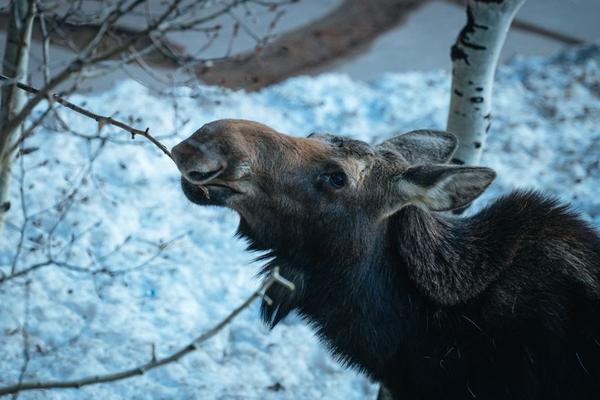
A moose can spend a summer afternoon standing chest-deep in a pond, pulling plants from beneath the surface. A few months later, the same animal may be picking twigs from snow-covered shrubs. That contrast explains the close relationship between moose habitat and diet: where moose live depends heavily on what they can eat, how easily they can reach it, and where they can escape heat or severe weather.
Moose are the largest living members of the deer family. Across North America, they rely on a changing menu of leaves, shoots, aquatic plants, and woody browse rather than grass alone.
Where Do Moose Live in North America?
The North American moose range stretches across much of Alaska and Canada, with populations extending into parts of the northern United States, including Maine, the Upper Midwest, and the northern Rocky Mountains. Their distribution is patchy: suitable food and shelter matter more than simply being far north.
Typical moose habitat includes boreal forest, mixed woodland, forest edges, willow thickets, marshes, and river valleys. Mountain populations also use subalpine shrublands. An ideal landscape often combines several habitats within easy traveling distance rather than one uniform stand of trees.
Wetlands and River Corridors
Ponds, slow-moving streams, marshes, and wet meadows provide lush plants during the growing season. Willows flourish along many riverbanks, supplying leaves in summer and twigs in winter. Water also gives moose access to aquatic vegetation, and shallow wetlands can offer some relief from hot weather.
These productive edges help explain why an otherwise quiet river corridor may support more feeding activity than a nearby dense forest with little undergrowth.
Young Forests and Protective Cover
Recently disturbed forests can be valuable after shrubs and saplings grow back. Following a wildfire or selective timber harvest, young willow, birch, and aspen may become abundant where sunlight reaches the ground. The benefit depends on how vegetation recovers; freshly burned ground is not automatically good feeding habitat.
Moose also need shaded or sheltered places. Mature forest can provide cooler resting areas in summer and protection from wind and deep snow in winter. The best habitat offers both food-rich openings and cover.
What Do Moose Eat?
Moose are herbivores and primarily browsers, meaning they feed heavily on the leaves and growing parts of trees and shrubs. Willow is especially important in many regions, alongside birch and aspen. They may also eat poplar, other shrubs, herbs, sedges, and aquatic plants, depending on local availability.
The answer to what do moose eat changes noticeably with the season. Fresh leaves and soft vegetation dominate when plants are growing; woody twigs and buds become crucial when snow covers lower plants.
Spring and Summer Foods
As snow melts, moose seek emerging shoots, tender leaves, and green plants such as sedges, horsetails, and other herbaceous growth. During summer they browse leafy shrubs and wade into shallow water to feed on pondweeds and other aquatic vegetation.
Water plants can provide minerals, including sodium, that may be scarce in terrestrial forage. Their importance varies with the region and the plants available. Summer’s more nutritious food also helps moose build the reserves they will need when winter feeding becomes difficult.
Autumn and Winter Foods
After leaves fall, moose increasingly clip the newest woody growth from willow, birch, and aspen. Buds, small twigs, and some bark can remain accessible above the snow. Winter browse is generally tougher and less nutritious than summer greenery, so moose often conserve energy by reducing unnecessary movement.
Deep snow can restrict access to shrubs and make walking costly. A stand of reachable willow beside sheltered forest may therefore be more valuable than a larger food patch that requires a difficult journey.
How Feeding Habits Change the Landscape
Moose are not passive visitors to these habitats. Repeated browsing can shape shrubs, shorten young shoots, and influence which tree seedlings survive. In areas with heavy use, branches may show a distinct browsing line at moose-head height.
But feeding pressure is only part of the story. Flooding, wildfire, forest regrowth, weather, and predators all influence where animals forage. Habitat quality is best understood as a seasonal patchwork, not a permanent list of favorite plants.
Moose Adaptations for Food and Cold Climates
Several moose adaptations make this lifestyle possible. Long legs help them move through brush, wetlands, and snow, while broad, spreading hooves provide support on soft ground. Their large, flexible muzzle and upper lip help grasp leaves and strip vegetation from branches.
A thick coat suits cold winters, and their digestive system, like that of other ruminants, processes fibrous plant material through microbial fermentation. Yet being built for cold has a downside: moose can overheat in warm weather. On hot days, they may rest under forest canopy or use wet places rather than feed in exposed openings.
Cold-weather adaptations do not eliminate winter hardship. Poor-quality browse, deep snow, parasites, and changing temperatures can all affect survival, especially for calves.
Reading Moose Habitat in the Field
Imagine looking across an Alaskan river valley in early summer. Young willows line the banks, a marsh lies nearby, and taller conifers shade the slope. That combination offers three necessities in one place: nutritious browse, aquatic feeding opportunities, and thermal cover.
Return in winter and the same valley tells a different story. Look for neatly clipped twig tips or tracks connecting shrub patches to sheltered timber. These signs can reveal how feeding locations shift without needing to approach an animal.
If you are watching moose, use binoculars from a generous distance. Never move between a cow and her calf, and do not approach a moose to photograph it feeding. For broader context, related topics include hoofed mammals of North America, wetland wildlife habitats, and how mammals survive winter.
Frequently Asked Questions
Do moose eat fish or other animals?
No. Moose are herbivores. Even when they submerge their heads in ponds, they are gathering aquatic plants rather than hunting fish.
Why do moose spend time in water?
Shallow water gives them access to aquatic vegetation and can help them stay cooler. Moose are also strong swimmers, although not every trip into water is for feeding.
What is a moose’s main winter food?
Woody browse, particularly accessible willow, birch, and aspen twigs and buds, forms the backbone of the winter diet in many North American habitats.
Can moose live in dense forests year-round?
They use dense forests for cover, but areas with little understory may offer limited food. Moose often benefit from nearby shrublands, young growth, wetlands, or river corridors.
Conclusion
Moose survive by following food through a landscape that changes with the seasons. Summer wetlands and leafy shrubs help them feed well, while winter willow stands and forest shelter become essential. Understanding that connection makes their movements easier to interpret and shows why protecting a variety of connected habitats matters more than preserving any single patch.