

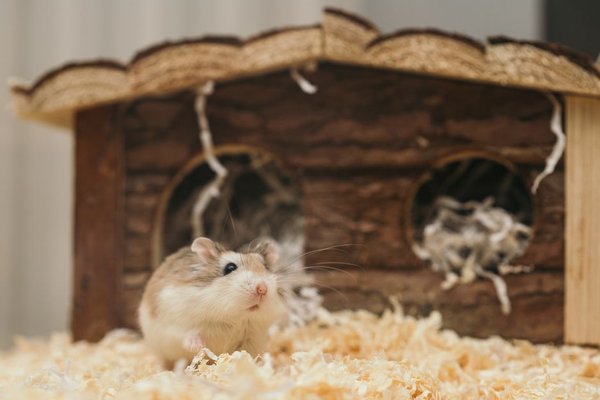
Hearing a hamster scrape its teeth against cage bars can be surprisingly loud, especially at night. An occasional exploratory nibble is not automatically a problem, but repeated bar chewing deserves attention. It often means the hamster is trying to meet a need the enclosure is not meeting, such as digging, exploring, foraging, running, hiding, or having more usable space.
The most useful way to think about hamster bar chewing causes is not simply “How do I stop the chewing?” but “What is my hamster trying to do instead?” Once the underlying need is addressed, the behaviour may become less frequent. Persistent chewing also matters because repeated contact with metal bars can contribute to facial or dental injury.
Why do hamsters chew cage bars?
The enclosure may be too small or restrictive
Hamsters are small animals with large behavioural needs. They are active mainly in the evening and at night, when they want to travel, investigate, dig and collect food. If usable floor space is limited, a hamster may repeatedly climb or chew at the enclosure boundary. Welfare guidance from PDSA and the RSPCA emphasises generous space, deep substrate and opportunities for natural behaviour.
If chewing happens mostly at one door or corner, watch what is outside that point. A hamster may learn that the opening is where food, attention or access to a larger area appears. The cage boundary may simply have become the focus of frustrated exploration.
There may not be enough opportunity to burrow
Burrowing is central to hamster behaviour. Research on golden hamsters has found more wire-gnawing in shallow bedding conditions and less when deep bedding allowed proper burrow construction. A thin decorative layer of substrate cannot provide the same outlet as a deep, stable area where the hamster can build tunnels, a nest and food stores.
Hamster boredom can become repetitive behaviour
A wheel alone is not complete enrichment. Hamsters also need places to hide, materials to shred, safe objects to gnaw and food that takes some effort to find. When the environment rarely changes and meals always arrive in the same bowl, bar chewing can become one of the few available activities.
Useful hamster enrichment ideas include scattering part of the daily ration through the bedding, hiding pellets in cardboard tubes, offering plain cardboard for shredding and rotating a few safe chew items. Foraging is especially useful because it encourages natural searching behaviour.
Stress may be adding to the problem
Possible hamster stress signs include repeated escape attempts, frantic climbing, excessive hiding, sudden defensiveness, disrupted resting patterns and other repetitive movements. Bar chewing may appear alongside these behaviours if the enclosure is noisy, the hamster is frequently disturbed during daytime sleep, or other pets can stare into or paw at the habitat.
Keep the enclosure in a calm area with a predictable light-dark routine. Avoid waking the hamster for handling, and provide covered hiding places so it can rest out of view.
Is bar chewing a hamster stereotypy?
Persistent, repetitive bar mouthing is sometimes described as a hamster stereotypy. In animal welfare science, stereotypic behaviour refers to repetitive patterns that can develop when an animal has difficulty performing strongly motivated natural behaviours. However, a few bites of a cage bar do not prove that a hamster has developed a stereotypy.
Look at frequency and pattern. Briefly testing a new cage is different from returning to the same bars for long periods every night. If the behaviour is repetitive and difficult to interrupt, treat it as a reason to review the whole environment rather than simply covering that section of bars.
How to stop a hamster chewing cage bars
Start with the habitat, not a deterrent
Do not coat cage bars with bitter products, essential oils or household substances. The safer approach is to address the reason for the behaviour. Review floor space, bedding depth, wheel size, hides, chew materials, feeding routine and cage location together. If the enclosure cannot hold enough bedding or provide enough usable area, upgrading the habitat may help more than repeatedly adding toys.
For example, suppose your hamster begins chewing at about 10 p.m. each night. Watch the few minutes before it starts. If the hamster wakes, checks the food area and then goes straight to the bars, try scattering part of its normal ration through the bedding before it wakes and add a cardboard forage parcel. If chewing continues, reassess space, burrowing depth and exercise opportunities rather than adding extra treats.
Provide a suitable wheel and safe things to gnaw
A solid-surface wheel should be large enough for the hamster to run without an obviously curved back. Research in golden hamsters has linked access to a functional wheel with less stereotypic bar-mouthing, although a wheel should be part of a richer habitat rather than the only activity available.
Hamsters naturally gnaw because their incisors grow continuously. Offer safe alternatives such as suitable untreated wood and plain cardboard. If a hamster ignores these but obsessively targets metal bars, the issue may be motivation and environment rather than a simple need to wear down its teeth.
When bar chewing needs veterinary attention
Contact an experienced small-animal or exotic vet if you notice a broken or misaligned tooth, bleeding, swelling, drooling, reduced appetite, weight loss, nasal discharge or difficulty eating. Veterinary guidance notes that cage-bar chewing can contribute to dental and facial trauma.
A sudden increase in bar chewing in a previously settled hamster also deserves attention. If the setup and routine have not changed, pain, illness or another source of stress may be involved.
FAQ
Does bar chewing mean my hamster is unhappy?
Not every brief nibble means a hamster is unhappy, but frequent repetitive chewing can indicate frustration, boredom, stress or an enclosure that does not support enough natural behaviour.
Will more chew toys stop bar chewing?
They can help, but chew toys alone may not solve the problem. A hamster also needs enough space, deep bedding, a suitable wheel, hiding places, foraging opportunities and uninterrupted rest.
Should I move my hamster to a glass enclosure?
A secure, well-ventilated glass or solid-sided enclosure can prevent access to bars and may make deep bedding easier to provide. However, changing the container without improving space and enrichment may only hide the underlying problem.
How quickly should bar chewing stop after improving the cage?
There is no fixed timetable. Some hamsters reduce the behaviour quickly, while an established habit can take longer to fade. Seek veterinary advice if chewing is intense, causes injury or appears alongside other health changes.
Conclusion
Repeated cage-bar chewing is best treated as useful information about your hamster’s needs. More usable space, deeper bedding, better foraging, a suitable wheel, safe gnawing materials and a calmer routine address the common drivers more effectively than making the bars unpleasant to chew. Watch what happens before the behaviour begins, make changes methodically, and take signs of mouth injury or sudden behavioural change seriously. The goal is not just a quieter cage, but a hamster with better ways to dig, explore, forage and stay occupied.