

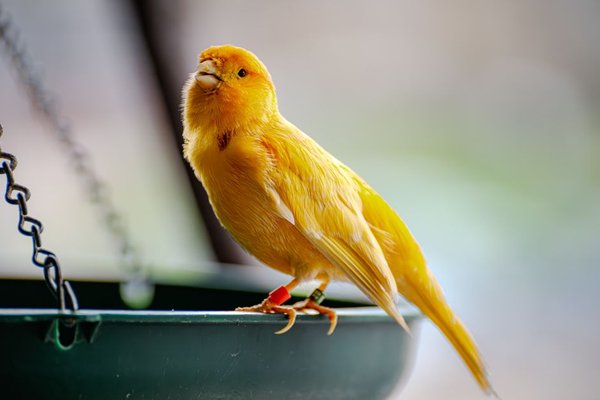
Canaries suit people who enjoy watching and listening to a bird more than handling one. They are active songbirds with relatively simple social needs, but “low hands-on” does not mean low care. A comfortable canary depends on a roomy cage, balanced food, clean water, bathing opportunities, a predictable day-night routine, and an owner who notices small changes before they become serious problems.
For canary care for beginners, the easiest approach is a steady daily rhythm: keep the environment safe, food and water predictable, and learn what is normal for your bird.
Start with a cage built for movement
A canary cage should support short flights, not simply provide a place to perch. Choose the largest practical rectangular cage, with enough open space for the bird to move between perches without brushing its wings against toys, bowls, or bars. Width is especially useful for a small songbird that moves from side to side, and bar spacing must be narrow enough to prevent escape or injury.
Use natural wooden perches with different diameters so the feet do not rest in one position all day. Keep them away from food and water dishes and leave a clear flight path through the middle. A swing and a few safe enrichment items add activity without turning the cage into an obstacle course.
Position the cage where the canary can see normal household activity without constant noise. Keep it away from kitchens, smoke, aerosols, strong fumes, radiators, air-conditioning vents, and cold draughts. Avoid leaving the cage in strong direct sun with no shaded retreat.
Related reading opportunities: choosing a cage for small birds, bird-safe household hazards, and natural perch ideas for pet birds.
Build a balanced canary diet, not a seed-only menu
Seed is strongly associated with canaries, but a seed-only diet can be nutritionally incomplete. Veterinary guidance favors balanced formulated food suitable for canaries, with seed as a smaller part of the diet and fresh produce added sensibly. If your bird currently eats only seed, change the diet gradually while watching food intake and body weight.
Offer small pieces of washed leafy greens and other bird-safe vegetables. Fruit can be given in modest portions. Remove fresh foods before they spoil, keep clean drinking water available at all times, and wash food and water dishes every day.
Canaries do not need grit to grind food. Avoid avocado, alcohol, caffeine, heavily salted foods, sugary processed foods, and other items known to be unsafe for birds. Supplements should not be added casually; an avian veterinarian can advise whether they are needed.
Offer bathing and keep the cage clean
Many canaries enjoy bathing when given a shallow dish or an external bath made for small birds. Offer clean lukewarm or room-temperature water regularly, preferably earlier in the day so the bird has time to dry before night. Some canaries bathe eagerly while others take time to investigate, so let the bird choose rather than forcing it into water.
Good hygiene supports feather condition and canary health. Replace soiled cage liner, clean bowls daily, and wash cage surfaces and perches as needed. A quick morning clean plus a regular deeper clean is easier than waiting until the cage is obviously dirty. Avoid strongly scented cleaners and rinse cleaned items well.
Respect light, sleep, and the canary’s social style
Canaries benefit from a consistent cycle of daylight and uninterrupted darkness. Keep late-night television, bright lamps, and repeated disturbance away from the sleeping area. Give the bird a predictable quiet period every night and a normal daytime routine for feeding, movement, bathing, and song.
A canary may become comfortable with your presence without wanting to be stroked or carried. That is normal. Calm observation, a steady voice, and slow movements are often more appropriate than frequent handling. Canaries can also be territorial, so adding a second bird should not be treated as an automatic solution for companionship; compatibility, sex, cage size, and introductions all matter.
Use simple enrichment without crowding the space
Enrichment should encourage movement and exploration. Rotate a small number of safe items rather than filling every corner. Swings, varied perches, leafy greens clipped in a safe place, and simple foraging opportunities can add interest. Introduce unfamiliar objects gradually because a cautious bird may avoid a new toy at first.
For example, if your canary spends most mornings hopping between the same two perches, move one slightly farther away and place a small piece of leafy green near the destination. The bird now has a reason to make a longer hop or short flight while investigating a familiar food. That small change can be more useful than adding a toy the bird never touches.
Learn your bird’s normal behavior
Birds often hide illness, so routine observation is one of the most useful parts of a canary care guide. Notice the bird’s usual appetite, activity, posture, droppings, breathing, feather condition, and vocal behavior. A sudden decrease in eating, persistent fluffing, weakness, unusual time on the cage floor, breathing difficulty, or a marked change in normal behavior deserves prompt veterinary attention.
Arrange an initial examination with an avian veterinarian after bringing a canary home, then follow the veterinarian’s advice for routine checkups. Do not wait for dramatic symptoms before seeking help; small birds can decline quickly.
A simple everyday routine
In the morning, refresh water, check food, remove obvious waste, and look at the bird before other tasks distract you. During the day, offer fresh produce, bathing water, and normal light and activity. In the evening, remove spoiled fresh food, make sure the cage area is calm, and allow a consistent dark, quiet sleep period. These few habits cover many of the most important daily needs.
Frequently asked questions
Are canaries good pets for beginners?
They can be, especially for someone who wants a bird to observe and listen to rather than handle frequently. Beginners still need to provide appropriate housing, nutrition, cleaning, enrichment, and veterinary care.
Can a canary live alone?
Many canaries can live comfortably alone when their environment is spacious and enriched. They may be territorial, so housing multiple canaries together requires more planning than simply placing another bird in the same cage.
How often should a canary bathe?
You can offer a clean bathing dish regularly and let the bird decide when to use it. Some canaries bathe very often while others are less enthusiastic. Keep the bath clean and remove it if it becomes soiled.
What is a common beginner mistake?
Relying on a small cage and an all-seed diet are two common problems. A better foundation is room to move, a balanced species-appropriate diet, clean water, regular hygiene, safe enrichment, and close observation of normal behavior.
Keep the routine simple and consistent
The best beginner care is dependable rather than complicated. Give your canary space to move, nutritious food, fresh water, safe bathing, appropriate light and rest, and a clean environment. Just as importantly, allow the bird to be a canary rather than expecting parrot-like handling. When you learn its normal rhythm and keep that routine steady, changes in canary health are easier to spot and everyday care becomes much more natural.