

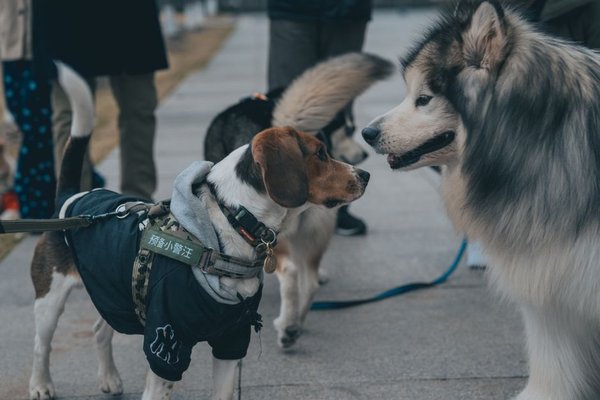
Socializing a reactive dog is not about making them greet every dog, welcome every stranger, or behave like the most outgoing pet at the park. For many rescue and shelter dogs, the safer and more realistic goal is neutrality: noticing a trigger without panicking, lunging, barking, freezing, or trying to escape. A dog can make excellent progress without ever becoming a social butterfly.
Dogs may react from fear, frustration, overexcitement, past experiences, pain, or several factors at once. Safe socialization works best when you measure comfort rather than how close your dog can get to a trigger.
Start by Learning Your Dog’s Threshold
Your dog’s threshold is the point where they shift from noticing a trigger to becoming too aroused or frightened to think clearly. Below threshold, a dog may look at another dog, person, bicycle, or unfamiliar object and still take food, respond to their name, sniff the ground, or turn back toward you. Over threshold, they may stare hard, stiffen, bark, lunge, growl, hide, pull away, or stop taking treats.
Effective dog reactivity training happens below that threshold. If your dog explodes at another dog from 15 feet away but can calmly observe one from 60 feet, begin at 60 feet or farther. Distance is not failure; it is one of your most useful training tools.
Learning subtle canine stress signals makes this process easier. A useful related guide would be dog body language and stress signals.
Use Controlled Exposure, Not Forced Interaction
One of the biggest mistakes in fearful dog socialization is assuming that more exposure automatically creates confidence. Repeated exposure can help only when the dog remains comfortable enough to learn. If every encounter is overwhelming, the dog may become more sensitive rather than less reactive.
A safer approach combines gradual desensitization with counterconditioning. Desensitization means exposing the dog to a trigger at a low enough intensity that they can remain relatively relaxed. Counterconditioning means pairing that trigger with something the dog genuinely values, often small pieces of high-value food.
For example, imagine your dog reacts to people wearing hats. Instead of asking a friend in a hat to walk directly toward your dog, have that person appear at a comfortable distance. The moment your dog notices the person, offer several small treats. When the person disappears, the treats stop. Over repeated sessions, the dog can begin to predict good things when the trigger appears. Only reduce distance when your dog is consistently relaxed.
Change the Picture for Leash Reactivity
Leash reactivity often looks dramatic because the dog cannot freely increase distance. A tight leash, narrow pavement, surprise greetings, or another dog approaching head-on can add pressure quickly. The answer is not to keep marching closer in the hope that your dog will “get used to it.”
Choose quieter routes and times of day while you build skills. Cross the street early, step behind a parked car, turn into a driveway, or make a calm U-turn before your dog reaches the point of barking or lunging. Management prevents repeated rehearsal of reactive behaviour and gives training a fair chance to work.
Teach an Easy Exit Cue
Practice a cheerful cue such as “this way” at home first. Say it, turn away, and reward your dog for following. Once the response is automatic in easy settings, use it outdoors when a trigger appears too close. This gives you a practical escape plan instead of relying on leash pulling or verbal corrections.
Let Neutrality Count as Social Success
Your dog does not need nose-to-nose greetings to become safer around other dogs. Parallel walking with a calm, well-matched dog can be much easier than face-to-face interaction. Begin far apart, move in the same direction, and gradually reduce the gap only if both dogs stay loose and comfortable.
The same principle applies to people. Ask visitors to ignore a nervous dog at first rather than reaching over their head, staring, or insisting on petting. A dog that chooses to stay across the room while remaining relaxed is already practising successful social exposure.
A related guide on introducing dogs safely can help when you are ready for carefully managed dog-to-dog work.
Reward What You Want to See
Current veterinary behaviour guidance favours reward-based methods for behaviour modification. Punishing barking, lunging, growling, or fearful behaviour can suppress warning signals without changing the underlying emotion, and aversive tools may increase fear or stress.
Instead, reward useful behaviours your dog can perform before they become overwhelmed. Looking at you, turning away from a trigger, sniffing calmly, walking beside you, or choosing to create distance can all be reinforced. The reward is not just for obedience; it helps build a more positive emotional response to the situation.
Know When to Get Professional Help
Some reactive dogs can improve with careful home training, while others need professional support. Speak with your veterinarian if the behaviour appeared suddenly, worsened quickly, or could be linked to pain or another medical problem. If there is a bite history, severe aggression, intense panic, or you feel physically unable to manage the dog safely, seek help from a qualified reward-based behaviour professional or veterinary behaviourist.
For dogs with a meaningful bite risk, positively conditioned basket-muzzle training may add an important layer of safety. A muzzle should be introduced gradually and should never be used as a substitute for distance, supervision, or a well-designed training plan.
A related guide on reward-based dog training methods can help strengthen everyday training skills.
Frequently Asked Questions
Can a reactive dog ever be fully socialized?
Many reactive dogs can become much calmer and more manageable, but the end goal varies. Some learn to enjoy selected social interactions, while others are happiest simply passing dogs or people without reacting. Progress should be judged by comfort and safety, not by forced friendliness.
Should I take my reactive dog to a dog park for socialization?
Usually, no. Dog parks are difficult to control because dogs can approach quickly and owners cannot reliably manage distance. A quiet location with one calm helper dog is generally a safer training setup.
How long does it take to socialize a reactive dog?
There is no fixed timeline. Progress depends on the dog’s history, triggers, health, learning speed, environment, and how consistently training stays below threshold. Think in terms of gradual improvement over weeks or months rather than expecting a quick cure.
What should I do if my dog refuses treats around a trigger?
Refusing normally desirable food often means the situation is too intense. Increase distance, reduce the trigger’s intensity, and give your dog time to recover. Training is more productive when the dog is calm enough to eat, think, and respond.
Build Confidence at Your Dog’s Pace
The safest way to socialize a reactive dog is to replace pressure with choice, distance, predictability, and positive experiences. Work below threshold, reward calm responses, avoid forced greetings, and make management part of the plan rather than treating it as a setback. For a fearful or reactive dog, being able to notice the world and remain comfortable is meaningful social progress in its own right.