

Dog enrichment is all over social feeds in 2026, from puzzle boards to quick scent games filmed in ordinary kitchens. The useful idea behind the trend is simple: dogs benefit from safe chances to sniff, search, chew, solve problems, play and interact with people. You also do not need a cupboard full of specialist toys. Many effective dog enrichment activities at home can be built around meals, familiar toys and short training sessions.
Think of enrichment as variety, not constant entertainment. Start easy, supervise homemade games, use part of your dog’s normal food allowance when treats are involved, and stop before curiosity turns into frustration.
Food and puzzle activities
1. Turn breakfast into a scatter search
Scatter some kibble across a clean room, rug or secure garden area and let your dog sniff it out. Begin with pieces in plain sight, then make the search gradually harder. It is an easy way to add mental stimulation for dogs without buying anything.
2. Use a snuffle mat
Hide dry food among the fabric strips and let your dog work at their own pace. Keep the first session simple so they understand the game, then vary where you place the food.
3. Fill a puzzle feeder
Puzzle feeders turn food into a problem to solve. Choose one suited to your dog’s size and experience, and start on an easy setting. If your dog becomes frustrated, reduce the difficulty.
4. Make a muffin-tin search
Put kibble in a few muffin cups and cover them with dog-safe balls that are too large to swallow. Your dog has to nudge or lift the balls to reach the food. Supervise strong chewers closely.
5. Play the cup game
Place a treat beneath one sturdy cup while your dog watches. Once they understand, add another cup and change the hiding place. This simple game works well even in a small flat.
6. Serve a stuffed food toy
Fill a durable, appropriately sized food toy with your dog’s regular food or another dog-safe filling. Chilling or freezing a suitable toy can make the challenge last longer.
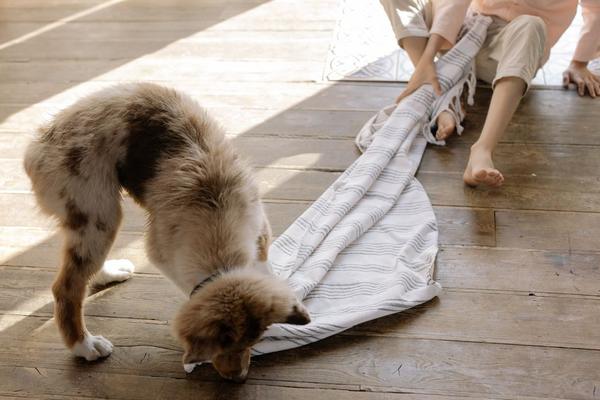
7. Try a supervised towel roll
Sprinkle kibble along an old towel, roll it loosely and let your dog unroll it with their nose. Remove the towel if they begin shredding or swallowing fabric.
Scent games for dogs
8. Teach “find it”
Say “find it,” toss a treat nearby and praise your dog when they locate it. Gradually hide treats behind furniture or around the edge of a room so the nose, rather than eyesight, does more of the work.
9. Hide treats in boxes
Set out several open cardboard boxes and place food in one or two. For a rainy-day version, use four boxes in the hallway and move the winning box between rounds so your dog cannot simply memorise the location.
10. Search for a favourite toy
Hide a favourite ball or soft toy somewhere easy and ask your dog to find it. Reward discovery with a quick game. This suits dogs that value play more than food.
11. Play hide-and-seek with a person
Ask your dog to wait with another family member, hide nearby, then call them. Make the first hiding places obvious before moving behind doors or furniture.
12. Create a short scent trail
Lay tiny food pieces in a trail leading to a final reward. Space them farther apart as your dog improves. Keep the route away from stairs, slippery floors and fragile objects.
Training, movement and play
13. Teach one tiny trick
Try a nose touch, chin rest, spin or paw target. A two- or three-minute training session makes your dog think and communicate without needing a long workout.
14. Teach toy names
Give one toy a consistent name and reward your dog for touching or picking it up on cue. Later, introduce a second toy and see whether they can distinguish between them.
15. Teach “put your toys away”
Place a low basket nearby and reward your dog for dropping a toy inside. Build the behaviour in small steps. Dogs that enjoy carrying objects often take to this game quickly.
16. Build a low indoor obstacle course
Create a route around chairs, between cones or over a pole laid flat on the floor. Keep surfaces stable and non-slip. Avoid jumping tasks for puppies, seniors or dogs with mobility concerns unless professionally advised.
17. Play controlled tug
Use a sturdy tug toy and simple rules: start on a cue, pause when asked, then restart as a reward. For dogs that enjoy it, tug combines social play with listening and self-control.
18. Play the “hot and cold” search
Hide a toy or treat and guide your dog with your voice, sounding more excited as they get closer and calmer as they move away. Keep the first hiding place easy.
19. Rotate the toy box
Leave only a few toys available and swap them every few days. Rotation can make familiar toys interesting again without constantly buying new ones. Keep favourite comfort items accessible if needed.
20. Let your dog choose the activity
Offer two or three safe options, such as a chew, puzzle and toy, then observe what your dog selects. Choice adds enrichment and helps you learn whether your dog currently wants to sniff, chew, solve or play.
Keep enrichment safe and enjoyable
Match the challenge to the individual dog. Puppies, senior dogs and nervous dogs may need simpler setups than confident adults. Supervise DIY activities, choose toys that cannot be swallowed, and count food rewards as part of the day’s intake. If your dog guards resources, becomes distressed or has health limitations, adapt the activity and seek professional advice when necessary.
Variety matters more than complexity. You might use a puzzle feeder at breakfast, a short trick session later and one of the scent games for dogs in the evening. Changing the combination can keep the routine fresh without making enrichment feel like a full-time job.
Frequently asked questions
How long should dog enrichment sessions last?
There is no fixed duration. Start with a few minutes, watch your dog’s body language and finish while they are still interested, especially with a new activity.
Can enrichment replace a walk?
Enrichment complements suitable physical exercise rather than automatically replacing it. Most dogs still need opportunities for movement, outdoor exploration and toileting.
What if my dog gets frustrated with puzzle toys?
Make the puzzle easier. Let your dog see where the food goes or open some compartments. A useful challenge should encourage investigation, not repeated frustration or giving up.
Do older dogs still need enrichment?
Yes. Gentle food searches, simple scent work and easy training can be adapted to a senior dog’s mobility, vision, hearing and health.
Make enrichment part of ordinary life
The best routine is not the most elaborate one; it is the one your dog enjoys and you can repeat safely. Use meals, sniffing, training and play as flexible building blocks, then adjust the difficulty based on your dog’s response. Small changes to an ordinary day can create meaningful mental stimulation at home.