

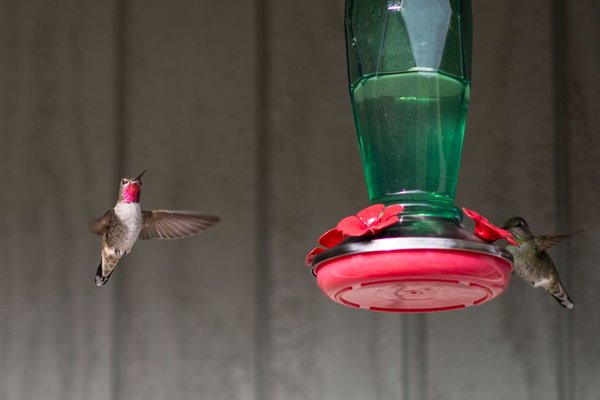
A hummingbird feeder can look clean outside while the nectar inside is already starting to spoil. Warm sugar water, direct sun, pollen, insects, and repeated visits create conditions where yeast, bacteria, and mold can build up quickly. That is why hummingbird feeder cleaning is not an occasional chore; it is part of feeding hummingbirds responsibly.
The routine is simple: empty old nectar, take the feeder apart, wash every surface that touches nectar, clear the feeding ports, rinse thoroughly, and refill with fresh sugar water. Once that becomes a habit, keeping a clean hummingbird feeder takes only a few minutes.
How often should you clean a hummingbird feeder?
In mild weather, cleaning every two to three days is a sensible baseline. During very hot weather, clean the feeder daily or every other day. If birds empty it sooner, wash it before every refill rather than pouring new nectar on top of the old.
Heavy use, direct sun, insect activity, and a feeder that traps residue in small crevices can all shorten the safe interval. Treat cloudy nectar, floating debris, a sour smell, black specks, stringy material, or visible mold as reasons to clean immediately. Let the condition of the feeder override the calendar.
A simple hummingbird feeder cleaning routine
Empty the feeder completely
Discard all remaining nectar. Do not save nectar that has been sitting in the feeder, and do not top it off with a fresh batch. Old and new liquid mix together, so topping off can carry contamination forward.
Take the feeder apart
Remove the reservoir, base, ports, guards, perches, and other removable pieces. Nectar feeder cleaning is more effective when you can reach seams and small channels where sugar residue collects. If a feeder has areas you cannot scrub or inspect, a simpler design may be easier to maintain safely.
Wash with hot water and a dedicated brush
Rinse each part with hot water and scrub the interior with a bottle brush or feeder brush reserved for this job. Small port brushes are useful for narrow openings. Pay extra attention to the underside of the base, threads, grooves, and gaskets.
For routine cleaning, thorough scrubbing and rinsing are the priority. Some hummingbird-feeding guidance advises avoiding ordinary dish soap because residue or fragrance may remain. If the manufacturer recommends detergent, use only a small amount and rinse repeatedly until no film, scent, or foam remains.
Use vinegar periodically for a deeper clean
A white-vinegar solution can help when film or stubborn residue develops. One commonly recommended approach is about one part white vinegar to four parts water. Let the parts soak briefly, scrub them, and rinse very thoroughly with clean water before refilling.
For persistent mold, or after a visibly sick bird has used the feeder, stronger disinfection may be appropriate. A dilute bleach solution is commonly used for bird-feeder sanitation, but it must be followed by thorough rinsing and complete drying. Follow the feeder manufacturer’s care instructions because some materials can be damaged by harsh cleaners.
Inspect the feeding ports before refilling
The ports deserve their own check. Black spots around an opening can be easy to miss, and sticky nectar may collect underneath guards. Inspect both sides in light. If visible residue cannot be removed with a small brush, replace the affected part or feeder.
Fresh nectar matters as much as a clean feeder
Hummingbird feeder hygiene is only half the job. Refill with fresh nectar made from plain white granulated sugar and water, generally at a ratio of one part sugar to four parts water. Avoid honey, artificial sweeteners, brown sugar, molasses, and red dye. The feeder can provide the color attraction; the nectar does not need coloring.
Only make as much nectar as you can use while it is fresh. Extra prepared nectar can be refrigerated in a clean container for a short period, but anything that has already been in the feeder should be discarded. Placing the feeder in partial shade can also help slow heating, although it does not replace regular cleaning.
Make the routine easier in real life
Suppose your feeder holds far more nectar than local hummingbirds drink in three days. Filling it to the top creates more waste and encourages longer refill intervals. Instead, add only enough for the expected number of visitors, then clean and refill on schedule. A smaller volume is often easier to manage safely.
Keeping two feeders can also help. One can be in use while the other is being washed and dried. Choose models with wide openings, removable bases, and ports you can reach with a brush. Ease of cleaning matters more than decorative complexity.
Useful companion topics for readers include hummingbird feeder placement, making hummingbird nectar safely, and attracting hummingbirds with native flowering plants. These extend the same goal: providing a dependable feeding area without making maintenance harder.
Common cleaning mistakes to avoid
One common mistake is waiting for visible mold. Microbial growth can begin before the feeder looks dirty, so a regular schedule matters. Another is rinsing only the reservoir while ignoring the base and ports, which are often the stickiest parts.
Do not assume clear nectar is automatically fresh. Heat can accelerate spoilage before obvious cloudiness appears. Likewise, do not refill a feeder that still smells sour or feels slippery after washing. Repeat the cleaning until all residue is gone.
If frequent cleaning is difficult, using a smaller feeder or fewer feeders is safer than leaving large amounts of sugar water outside too long. Hummingbird nectar safety depends on both fresh food and clean equipment.
FAQ
Can I clean a hummingbird feeder with vinegar?
Yes. White vinegar diluted with water is widely used for periodic feeder cleaning. A mixture of about one part vinegar to four parts water can help loosen film and residue. Scrub after soaking and rinse thoroughly before adding fresh nectar.
How often should I clean a hummingbird feeder in summer?
During hot weather, clean it daily or every other day, especially if it sits in sun or the nectar changes appearance. In milder conditions, every two to three days is a common baseline. Clean sooner whenever nectar becomes cloudy or debris, mold, or insects appear.
Should I wash a hummingbird feeder every time it empties?
Yes. Washing before refilling is a good habit, particularly during warm weather. Do not simply add fresh nectar to residue left from the previous batch.
What should I do if I see black mold?
Take the feeder down immediately, discard the nectar, disassemble it, and clean every affected surface and port. If staining or growth remains in an area you cannot reach, replace the feeder or part rather than putting it back into use.
Keep the routine simple and consistent
A safe feeding setup does not require complicated products. It requires consistency: discard old nectar, scrub the feeder, clear the ports, rinse well, inspect the parts, and refill with a fresh, correctly mixed sugar solution. Clean more frequently when heat or heavy use demands it.
That small routine protects nectar quality and makes the feeder a more dependable stop for visiting hummingbirds. A useful standard is simple: if the feeder looks, smells, or feels questionable, clean it before putting it back outside.