

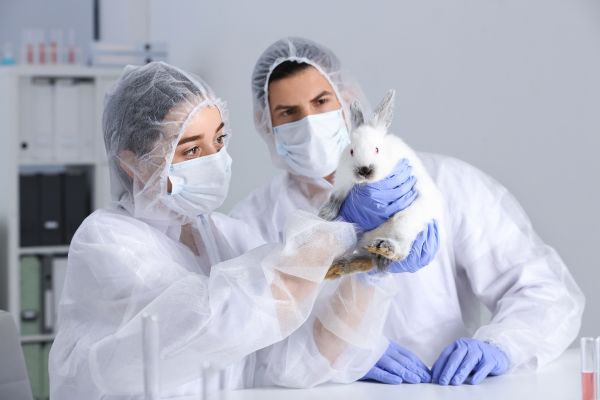
For much of modern scientific history, animals have been used to investigate disease, evaluate chemicals, and estimate whether new medicines might be safe for people. These studies have contributed to medical knowledge, but they have also created lasting ethical concerns. Animals can experience pain and distress, while biological differences between species sometimes limit how accurately results predict human reactions.
The search for alternatives to animal testing is therefore not driven by ethics alone. It is also part of a broader effort to make research more relevant to human biology, more reproducible, and, in some cases, faster than conventional testing.
Modern laboratories now use human cells, computer models, miniature organs, donated tissues, and carefully designed combinations of methods. None offers a universal solution, yet together they are beginning to change how scientists study health, disease, and chemical safety.
Moving Beyond the Idea of a Single Replacement
The phrase “alternative method” can create the impression that one new test will eventually replace every animal study. Science is rarely that straightforward.
Animal experiments have been used to answer many different questions. A researcher may want to know whether a substance irritates skin, damages DNA, affects a developing fetus, changes hormone activity, or causes harm after repeated exposure. Each question requires a different kind of evidence.
For that reason, alternatives to animal testing are increasingly described as new approach methodologies, or NAMs. The term includes laboratory techniques, computer-based models, biochemical tests, and testing strategies that avoid the use of intact animals. Regulators evaluate these methods according to their reliability, reproducibility, biological relevance, and suitability for a particular purpose.
The future is likely to involve combinations of evidence rather than one-for-one substitutions.
Human Cell Cultures Offer a More Direct View
Traditional cell culture is one of the most established non-animal approaches. Scientists grow human cells in controlled laboratory conditions and observe how they respond to medicines, chemicals, infections, or changes in their environment.
These systems can reveal whether a substance damages cells, disrupts normal biological processes, or triggers inflammation. Because the cells are human, the results may address aspects of human biology that are difficult to reproduce in another species.
Cell cultures are already used in areas such as skin and eye irritation testing, toxicity screening, cancer research, and drug discovery. Reconstructed human skin models, for example, can mimic important features of real skin and have supported validated non-animal testing approaches. European scientific bodies continue to assess and standardize such methods for regulatory use.
Basic cell cultures do have limits. Cells grown in a flat dish cannot reproduce the full complexity of circulation, metabolism, immune responses, and communication between organs. Even so, they provide a valuable foundation for more advanced models.
Organoids Recreate Features of Human Organs
Organoids are three-dimensional structures grown from stem cells or other human cells. They organize themselves in ways that resemble certain features of organs such as the liver, brain, intestine, lung, or kidney.
A liver organoid, for instance, may help researchers investigate how liver tissue responds to a drug. Intestinal organoids can be used to explore infection, inflammation, and inherited disease. Cancer organoids created from a patient’s cells may also reveal how an individual tumor responds to different treatments.
These models are especially promising because they can capture aspects of human disease and, in some cases, patient-to-patient variation. The US National Institutes of Health has established a dedicated initiative to improve the standardization, reproducibility, and regulatory usefulness of organoid models.
Organoids are not miniature people, however. Many lack blood vessels, mature immune systems, or connections with other organs. Their usefulness depends on the specific question being studied.
Organs-on-Chips Add Movement and Physical Conditions
Organ-on-chip technology takes human cell research a step further. These small devices contain living cells arranged in channels through which fluids can move. Researchers can recreate physical forces such as blood flow, breathing motions, or pressure.
A lung-on-chip may imitate the movement that occurs as lung tissue expands and contracts. A kidney chip can model filtration, while a liver chip may show how a drug is metabolized. Some platforms connect several tissue types, allowing scientists to study interactions between organs.
The aim is not to build a complete artificial human body. It is to reproduce selected biological functions in a controlled environment where changes can be measured closely.
The NIH Tissue Chip program is developing these systems to improve predictions of whether medicines will be safe or toxic in people. Because tissue chips use human cells, they may also be helpful when animal models do not accurately reproduce a particular human disease.
Challenges remain, including cost, technical complexity, and differences between laboratories. Still, organ chips are becoming an important bridge between simple cell cultures and whole-body biology.
Computer Models Can Predict Biological Effects
Not every scientific question requires a physical experiment. Computational methods can analyze chemical structures, biological pathways, previous test results, and human clinical data to predict how a new substance may behave.
One widely used approach is quantitative structure–activity relationship modelling, often shortened to QSAR. It compares the structure of a chemical with substances that have known effects. If two compounds share important characteristics, scientists may be able to estimate whether they are likely to produce similar hazards.
Read-across follows a related principle. Instead of repeating a test on every new substance, researchers use reliable information from closely related chemicals to fill data gaps.
The OECD maintains tools designed to make these predictions more transparent and useful in regulatory chemical assessment.
Modern computational research also includes physiologically based pharmacokinetic models, which estimate how a substance is absorbed, distributed, metabolized, and removed from the human body. Artificial intelligence can help identify patterns across large datasets, though predictions must still be checked against dependable biological evidence.
Donated Human Tissues Provide Real Biological Evidence
Human tissues removed during surgery or donated after death can offer information that cell lines and animal models may not capture. Researchers can study healthy and diseased tissue to understand how medicines interact with real human organs.
Liver tissue may reveal patterns of metabolism. Samples from tumors can help test potential cancer treatments. Placental tissue, blood, skin, and sections of the intestine can support research into development, immunity, infection, and toxicity.
The supply of suitable tissue is limited, and samples may vary because of age, health, medication use, and genetic background. Those differences complicate experiments, but they also reflect the true diversity of the human population.
Ex vivo tissue research is therefore most useful when combined with other evidence rather than treated as a complete replacement on its own. Current regulatory roadmaps identify donated human tissues as part of a broader move toward more human-relevant safety assessment.
Carefully Controlled Human Studies Can Answer Specific Questions
Some questions can be explored directly in people using methods designed to minimize risk. Microdosing, for example, involves giving volunteers an extremely small amount of a substance—too little to produce a therapeutic effect—and tracking how it moves through the body.
Advanced imaging, blood analysis, and biomarker studies can provide early information about absorption and distribution. These studies cannot replace the evidence needed to establish full safety, but they may help researchers reject unsuitable drug candidates earlier.
Human population studies also contribute valuable evidence. Medical records, epidemiological research, and real-world treatment data can reveal effects that may not be visible in short laboratory experiments.
Ethical safeguards are essential. Participants must give informed consent, and exposure must remain within carefully reviewed limits. Used responsibly, human-based research can answer questions that no animal model can reproduce exactly.
Integrated Testing Creates a Stronger Picture
The most effective alternatives to animal testing often work as part of an integrated strategy. A researcher might combine computer predictions with human cell tests, an organ chip, chemical analysis, and existing human data.
Each method addresses a different part of the problem. A cell test may identify a biological mechanism, while a computational model estimates exposure in the body. An organoid may reveal tissue damage, and clinical data may show whether the same pattern appears in people.
This weight-of-evidence approach avoids expecting one method to answer every question. It can also help scientists identify uncertainty more clearly.
International test standards are important because laboratories must be able to reproduce results. OECD guidance emphasizes that in vitro methods require defined procedures and quality controls if regulators are to trust the data.
Validation Remains the Central Challenge
A new method is not automatically better simply because it does not use animals. It must produce consistent results, measure the biological effect it claims to measure, and provide enough information for the decision being made.
Validation can take years. Different laboratories need to test the method, compare results, define its limitations, and establish standardized procedures. Regulators must then determine where the evidence is sufficient and where additional testing remains necessary.
Validated non-animal methods are already available for some purposes, but gaps remain, particularly for complex effects involving multiple organs, long-term exposure, reproduction, development, or whole-body immune responses.
Recognizing these limitations is not an argument against change. It is what allows change to happen responsibly.
Ethical Science Is Also Better-Targeted Science
The movement toward alternatives to animal testing is sometimes presented as a conflict between animal welfare and human safety. In practice, the strongest approaches aim to improve both.
Human-based cells, tissues, organoids, chips, and computational models can focus research more directly on the biology that matters to patients. They can also reduce unnecessary duplication, identify ineffective drug candidates earlier, and allow large numbers of chemicals to be screened more efficiently.
Animal studies have not disappeared, and replacing every use will require further scientific progress. Yet the direction is increasingly clear. Agencies in the United States, Europe, and other regions are developing frameworks that encourage scientifically valid non-animal methods while maintaining standards for public and environmental protection.
A More Humane and Human-Relevant Future
Alternatives to animal testing are not a single invention waiting to transform science overnight. They are a growing collection of methods, each suited to particular questions and each carrying its own strengths and limitations.
Their importance lies in the possibility of building research around human biology from the beginning rather than relying mainly on another species as a substitute. That transition requires careful validation, regulatory cooperation, transparent data, and patience.
Progress may be gradual, but it is meaningful. Ethical science does not ask researchers to choose compassion over accuracy. At its best, it seeks methods that are both more humane and more capable of explaining what will actually happen in the human body.